Counsels of the Wicked Are Deceit: Proverbs 12:5 KJV Meaning
Uncover the deep meaning of Proverbs 12:5 KJV—"The thoughts of the righteous are right: but the counsels of the wicked are deceit." Explore contrasts in thoughts vs. counsels, Hebrew insights, biblical cross-references, and practical warnings against deceptive advice today.

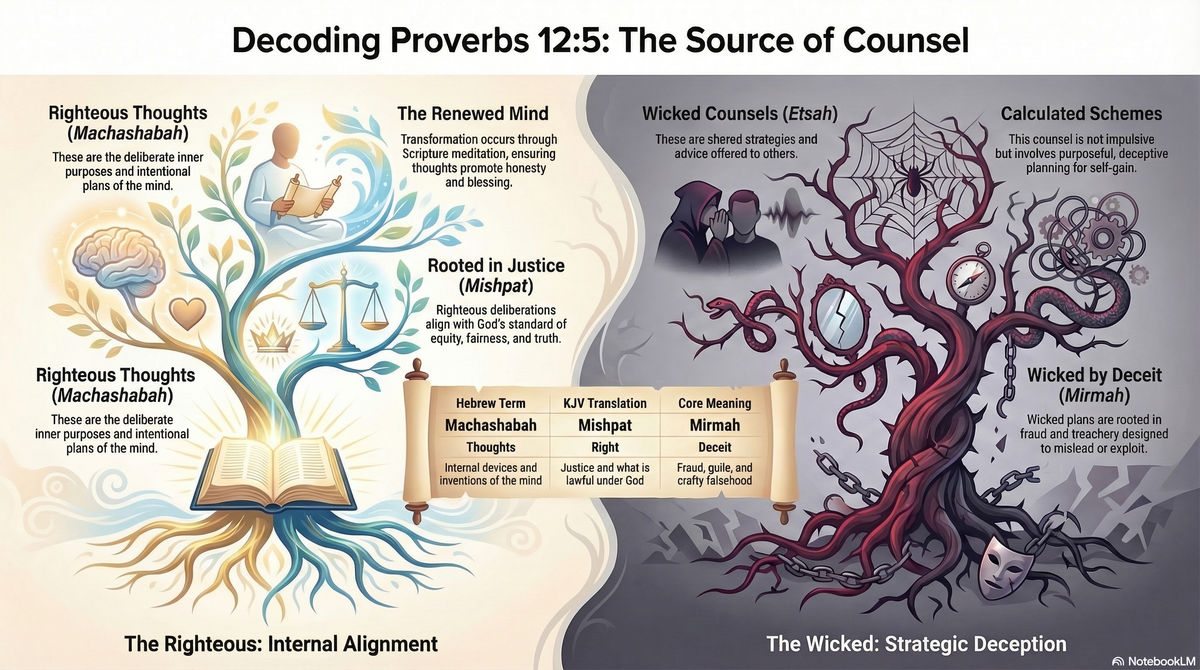
Proverbs 12:5 in the KJV Bible sharply contrasts inner character: "The thoughts of the righteous are right: but the counsels of the wicked are deceit." The righteous person's deliberate plans and intentions align with justice and God's moral order, flowing from a renewed mind. In stark opposition, the wicked's calculated advice, strategies, and schemes are rooted in deception—designed to mislead, exploit, and harm. This verse warns that wickedness corrupts not just actions but the very source of counsel, urging believers to guard their thoughts, seek godly advice, and discern deceitful influences. It highlights how heart condition determines the nature of one's guidance, with eternal implications for justice, relationships, and spiritual integrity.
Introduction
Have you ever received advice that sounded wise at first but later proved manipulative or self-serving? Proverbs 12:5 KJV exposes the hidden danger in such moments, declaring: "The thoughts of the righteous are right: but the counsels of the wicked are deceit." This single verse, part of Solomon's wisdom collection, pierces to the core of human motivation, revealing that true character shows not only in deeds but in the private deliberations and shared plans that shape destinies.
In the King James Version's majestic prose, the proverb draws a razor-sharp line between righteousness and wickedness. The righteous think justly because their minds are oriented toward God's standard of equity and truth. The wicked, estranged from God, produce counsels steeped in mirmah—fraud and treachery masked as prudence. This isn't about occasional mistakes; it's about the foundational springs of the heart.
Why does this matter in our era of misinformation, hidden agendas in relationships, business, and even spiritual circles? Proverbs 12:5 serves as a divine diagnostic: examine the source of counsel you heed or offer. As external influences bombard us—social media "wisdom," self-help gurus, or peer pressure—this verse calls for discernment rooted in Scripture. It echoes broader biblical themes: thoughts precede actions (Proverbs 23:7), the heart is deceitful without God (Jeremiah 17:9), and renewal comes through Christ (Romans 12:2).
This exploration delves into the verse's text and Hebrew nuances, the righteous thoughts versus wicked counsels contrast, cross-references, theological depth, common misinterpretations, and practical applications for guarding the mind and choosing counsel wisely—all grounded in the KJV for faithful study.

The Text of Proverbs 12:5 in KJV Context
The King James Version renders it plainly yet powerfully: "The thoughts of the righteous are right: but the counsels of the wicked are deceit."
- Thoughts (Hebrew: machashabah): Deliberate devices, inventions, or purposes of the mind—intentional planning in the inner self.
- Right (mishpat): Justice, equity, what is lawful and fair according to God's order.
- Counsels (etsah): Advice, strategies, deliberate plans—often shared or implemented.
- Deceit (mirmah): Fraud, treachery, guile—crafty falsehood intended to mislead.
The contrast is stark: righteous inner purposes align with divine justice; wicked counsels overflow with calculated deception. This follows Proverbs 12:1–4's themes of loving correction and contrasts with verse 6: "The words of the wicked are to lie in wait for blood."
Historical/language context: In 1611 English, "counsels" carried weight as purposeful advice (cf. royal councils), while "deceit" evoked betrayal. The Hebrew terms emphasize intentionality—wickedness here is not impulsive but schemed.
The Thoughts of the Righteous: Right and Just
The righteous (tsaddiq) produce thoughts that are mishpat—aligned with God's righteous judgments. Their minds, renewed by fearing the Lord (Proverbs 1:7), conceive plans that promote fairness, honesty, and blessing.
This echoes New Testament transformation: "be ye transformed by the renewing of your mind" (Romans 12:2, KJV). The righteous hide God's Word to avoid sin (Psalm 119:11), so their deliberations become a fountain of uprightness. As Proverbs 23:7 states, "For as he thinketh in his heart, so is he."
Practical examples:
- In business: Planning fair dealings, not shortcuts.
- In family: Counseling with love and truth.
- In church: Offering edifying, Scripture-based advice.
Nuance: Righteous thoughts aren't infallible but consistently oriented toward justice; they allow correction (Proverbs 12:1).
Edge case: Even believers struggle with stray thoughts, but renewal through confession and Scripture guards the wellspring.
The Counsels of the Wicked: Deceitful and Treacherous
The wicked (rasha) craft etsah rooted in mirmah—deception as strategy. Their plans aren't mere errors but intentional fraud: promising gain while plotting loss, cloaking evil in fair words.
Commentaries highlight calculation: the wicked devise evil continually (Psalm 36:4; Micah 2:1), lying in wait (Proverbs 12:6). Examples include false accusations (like Job's friends), manipulative relationships, or hypocritical religion (2 Corinthians 11:13–15).
Warning: Beware counsel from ungodly sources (Psalm 1:1). Polished worldly advice—career shortcuts, relational games—often leads to ruin when deceit underlies it.
Common misinterpretation: Viewing "wicked" as only overt criminals; Scripture includes subtle schemers whose hearts lack God-fear.

Theological Reflection: Heart, Mind, and Divine Judgment
Proverbs 12:5 reveals character determines counsel. Righteousness renews toward justice; wickedness corrupts toward guile. God searches hearts (Jeremiah 17:10), judging thoughts and intents (Hebrews 4:12).
Broader wisdom literature: Job endures false counsels; Psalms plead deliverance from deceit; Ecclesiastes sees vanity in godless schemes. Jesus traces evil to the heart (Matthew 15:19) yet promises purity for the pure in heart (Matthew 5:8).
In the New Testament: Cast down evil imaginations (2 Corinthians 10:5); beware false brethren (2 Corinthians 11:26); resist the devil's schemes (1 Peter 5:8). Grace triumphs—Christ renews minds, enabling righteous thoughts.
Balanced view: Not all non-believer advice is evil, but discernment is essential; righteousness alone produces truly trustworthy counsel.
Application: Guarding Thoughts and Choosing Counsel Today
Examine your heart: Are thoughts right—Scripture-aligned? Or do deceitful influences seep in?
- Guard your mind: Daily Scripture meditation, prayer, rejecting lies (Philippians 4:8).
- Seek godly counsel: From proven righteous sources (Proverbs 11:14; 15:22).
- Discern in relationships/business: Avoid treacherous partnerships; test advice against God's Word.
- In spiritual life: Renew mind against Satan's deceit; offer truthful counsel.
- When deceived: Cling to truth, as Job did amid false accusations.
Practical steps:
- Journal thoughts daily, comparing to Scripture.
- Pray for discernment in advice received/offered.
- Build fellowship with righteous counselors.

Common Questions / FAQs
What does "counsels of the wicked are deceit" mean in Proverbs 12:5 KJV?
It means the deliberate plans and advice of wicked people are rooted in fraud and treachery, designed to mislead or harm rather than help.
How do the thoughts of the righteous differ from wicked counsels in Proverbs 12:5?
Righteous thoughts are just and equitable, aligned with God's standard; wicked counsels are deceptive, calculated for self-gain at others' expense.
Why focus on thoughts and counsels instead of actions in Proverbs 12:5?
Because actions flow from the heart/mind; corrupt thoughts inevitably produce deceitful advice and deeds (cf. Proverbs 23:7; Matthew 15:19).
Is all advice from non-believers deceitful according to Proverbs 12:5?
Not necessarily overt deceit, but Scripture warns that without God-fear, counsel lacks true wisdom and may lead astray (Psalm 1:1).
How can believers renew thoughts to be "right" like the righteous in Proverbs 12:5?
Through mind transformation by God's Word and Spirit (Romans 12:2), meditation on Scripture, and accountability.
What cross-references support Proverbs 12:5's warning?
Psalm 1:1 (avoid ungodly counsel); Jeremiah 17:9 (deceitful heart); 2 Corinthians 10:5 (captive thoughts); Psalm 36:4 (devising evil).
Does Proverbs 12:5 apply to modern issues like fake news or manipulative advice?
Yes—it warns against any counsel rooted in deceit, urging discernment in media, relationships, and decisions.
How does Christ fulfill the righteous thoughts in Proverbs 12:5?
Jesus perfectly thought and counseled justly; in Him, believers receive renewed minds to produce righteous thoughts (Ephesians 4:23).
Conclusion
Counsels of the wicked are deceit Proverbs 12:5 KJV meaning unveils a profound warning: the heart's condition shapes every plan and piece of advice. Righteous thoughts, renewed by God's truth, produce justice and blessing; wicked counsels, corrupted by separation from Him, breed treachery and harm. This verse isn't mere observation—it's a call to self-examination and vigilance.
Key takeaways: Thoughts matter eternally; guard them diligently. Seek counsel from those whose lives prove righteous fear of God. Discern deception in a world full of schemes. In Christ, grace provides renewal—casting down evil imaginations, bringing thoughts captive to obedience.
Beloved, let Proverbs 12:5 prompt reflection: What counsels influence you? Are your own thoughts right? Turn to Scripture daily, pray for purity of mind, and surround yourself with godly fellowship. As Solomon urges elsewhere, "in all thy ways acknowledge him, and he shall direct thy paths" (Proverbs 3:6, KJV).
Study this verse in your KJV Bible—perhaps alongside chapter 12 for context. Share below: How has discerning counsel impacted your life? Explore more KJV Proverbs deep dives in our Wisdom Literature section. May the Lord purify your thoughts and protect you from deceitful counsels. Amen.