Deep-Dive 10 Questions on God's Good Plans: Applying Jeremiah 29:11 to Your Life Journey
Deep questions to apply Jeremiah 29:11's hope to your personal journey and future.
Beloved in Christ, as we approach the threshold of a new year, many hearts turn toward hope, purpose, and the assurance of God's sovereign direction. The promise found in Jeremiah 29:11 stands as one of the most cherished declarations in all of Scripture: God's thoughts toward His people are thoughts of peace and not of evil, to give an expected end filled with hope.
This verse speaks directly into the human longing for meaning amid uncertainty, reminding us that the Lord who formed the heavens and the earth has already written the story of our lives with divine intentionality. It aligns with the grand biblical theme of God's redemptive plan—from the covenant promises to Abraham, through the prophetic assurances of restoration, to the ultimate fulfillment in Christ Jesus, who declares, “I am come that they might have life, and that they might have it more abundantly” (John 10:10, KJV).
Scriptural Exposition
Let us first examine the text itself in its immediate context. Jeremiah 29:11 in the King James Version reads:
“For I know the thoughts that I think toward you, saith the LORD, thoughts of peace, and not of evil, to give you an expected end.”
The New King James Version renders it similarly for clarity:
“For I know the plans that I have for you, says the LORD, plans of peace and not of evil, to give you a future and a hope.”
In modern English, preserving the full meaning:
“For I alone know the plans I have for you—plans to prosper you and not to harm you, plans to give you hope and a future.”
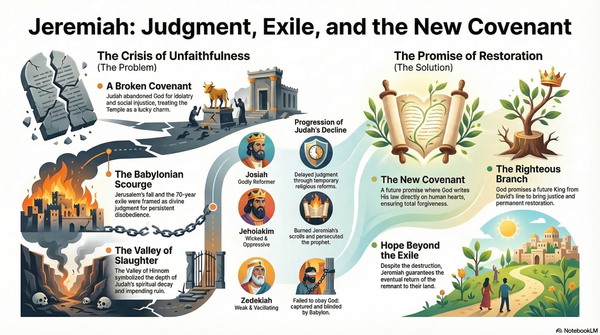
This word came to the Jewish exiles in Babylon through the prophet Jeremiah. They were in a season of deep displacement, having been removed from Jerusalem because of persistent national disobedience. False prophets were promising quick deliverance, but God corrected them: seventy years of captivity must first be fulfilled (Jeremiah 29:10). Only after that appointed time would He visit them and perform His good word. Thus, Jeremiah 29:11 is not a blanket promise of immediate ease, but a covenant assurance that even judgment serves a greater purpose of restoration.
We see this same pattern throughout Scripture. In Genesis 50:20, Joseph declares to his brothers, “But as for you, ye thought evil against me; but God meant it unto good, to bring to pass, as it is this day, to save much people alive.” What appeared as harm was woven into God's plan of salvation. In Romans 8:28, Paul echoes the principle: “And we know that all things work together for good to them that love God, to them who are the called according to his purpose.” The “good” here is ultimately conformity to the image of Christ (v. 29), and the “expected end” of Jeremiah 29:11 finds its fullest expression in the eternal inheritance reserved for believers (1 Peter 1:4).
Reflective Insights
The promise of Jeremiah 29:11 invites us to wrestle with the tension between God's absolute sovereignty and the reality of present suffering. Job cried out in anguish, yet concluded, “Though he slay me, yet will I trust in him” (Job 13:15). The Psalms repeatedly model this honest dialogue: “Why art thou cast down, O my soul? and why art thou disquieted within me? hope thou in God” (Psalm 42:11). Proverbs reminds us that “The heart of man plans his way, but the LORD directs his steps” (Proverbs 16:9, adapted). Ecclesiastes teaches that seasons of adversity and prosperity alike come from the hand of God for our eternal good (Ecclesiastes 3:1-11).
In the Gospels, Jesus embodies this truth. Though He was destined for the cross—an event that appeared as utter calamity—He prayed, “Nevertheless not my will, but thine, be done” (Luke 22:42). The disciples initially saw only defeat, but resurrection morning revealed the glorious plan hidden within the suffering. Paul, writing from prison, could say, “I have learned, in whatsoever state I am, therewith to be content” (Philippians 4:11), because he knew the Lord was working all circumstances toward an eternal weight of glory (2 Corinthians 4:17).
Revelation closes the canon with the ultimate “expected end”: the New Jerusalem where God wipes away all tears, and former things are passed away (Revelation 21:4). Thus, Jeremiah's promise is not merely for temporal prosperity, though God graciously grants daily bread. It is primarily for spiritual flourishing—peace with God through Christ, progressive sanctification, and final glorification. God's “good plans” are measured by His perfect wisdom, not our limited perspective.
Practical Applications
To help you apply Jeremiah 29:11 personally and deeply, here is a guided deep-dive worksheet titled “Discovering God's Good Plans in My Life Journey.” Use it individually, with a spouse or friend, in a small group, or under pastoral guidance. Set aside quiet time, open in prayer, and journal your responses honestly before the Lord.
- Read Jeremiah 29:10-14 slowly three times. What emotions surface as you consider that God's good plans sometimes include appointed seasons of waiting or discipline?
- List three current circumstances that feel confusing, painful, or stagnant. Beside each, write one way God has been faithful to you in the past (recall specific answered prayers or provisions).
- In verse 11, God says, “I know the plans I have for you.” What does it mean practically that the all-knowing God holds the blueprint of your life rather than you holding it?
- The exiles were instructed to seek the welfare of Babylon (v. 7). What “Babylon” (difficult place or relationship) is God currently calling you to bless and pray for rather than resist?
- Verse 12 promises, “Then shall ye call upon me, and ye shall go and pray unto me, and I will hearken unto you.” How has your prayer life reflected genuine seeking of God's face rather than merely His hand this past year?
- Verse 13 declares, “And ye shall seek me, and find me, when ye shall search for me with all your heart.” Rate your wholeheartedness in pursuing God on a scale of 1-10 over the last month. What distractions need to be laid aside?
- What specific hopes or dreams have you placed before the Lord that remain unfulfilled? Surrender them afresh in writing, adding the words of Jesus: “Nevertheless, not my will but Yours be done.”
- Identify one character quality (patience, humility, forgiveness, etc.) that God appears to be forming in you through present trials. Thank Him specifically for that refining work.
- How does the truth that your ultimate “future and hope” is eternal life with Christ change your perspective on earthly successes or failures?
- Write a brief letter to your future self one year from now, expressing trust in God's good plans regardless of outcomes.
- Who in your life needs to hear the encouragement of Jeremiah 29:11 this week? Plan a specific way to share the verse and your testimony with them.
- Close by writing a prayer of surrender and expectation, asking God to reveal the next step in His good plan for you.
Key Takeaways and Study Plan
- God's plans are known perfectly by Him, rooted in His omniscience and goodness.
- His plans are for peace (shalom—wholeness) and not calamity, though they often include refining seasons.
- The promise requires patient waiting on God's timing, not immediate deliverance.
- Seeking God with the whole heart is the pathway to experiencing His plans.
- All circumstances, even painful ones, are woven into His redemptive purpose for those who love Him.
- The ultimate fulfillment of the “expected end” is eternal communion with Christ.
- Active obedience and prayer in the present season position us to receive future blessing.
Seven-Day Study Plan: “Walking in God's Good Plans”
- Day 1: Read Jeremiah 29:1-14. Journal responses to questions 1-3.
- Day 2: Meditate on Genesis 50:15-21 and Romans 8:28-39. Complete questions 4-5.
- Day 3: Study Psalm 139. Reflect on God's intimate knowledge of your life. Answer questions 6-7.
- Day 4: Read the account of Jesus in Gethsemane (Luke 22:39-46). Work through questions 8-9.
- Day 5: Explore Ephesians 1:3-14 and 2:10. Journal question 10.
- Day 6: Review Philippians 1:6 and 4:6-7. Complete questions 11-12.
- Day 7: Prayer walk or extended time of worship, thanking God for His good plans. Share what you learned with another believer.
Conclusion
Dear friend, Jeremiah 29:11 is not a mere motivational quote, but the very word of the living God spoken over His covenant people—now fulfilled and expanded in the New Covenant through the blood of Christ. Whatever chapter of your life journey you currently inhabit—whether mountaintop, valley, or wilderness—rest assured that the Author of your story is writing with infinite wisdom and unfailing love. He who began a good work in you will perform it until the day of Jesus Christ (Philippians 1:6). Lift your eyes to Him, seek Him with all your heart, and walk forward in confident expectation. The Lord has good plans for you, plans that will lead you safely home to glory. May His peace guard your heart and mind as you trust Him anew today.