Do Jewish Traditions Follow the New Testament? KJV Insights
Explore whether Jewish traditions follow the New Testament in the KJV Bible. Discover key differences in canon, Messiah, monotheism, atonement, and covenant, plus Christian views on fulfillment and a call to prayerful love.

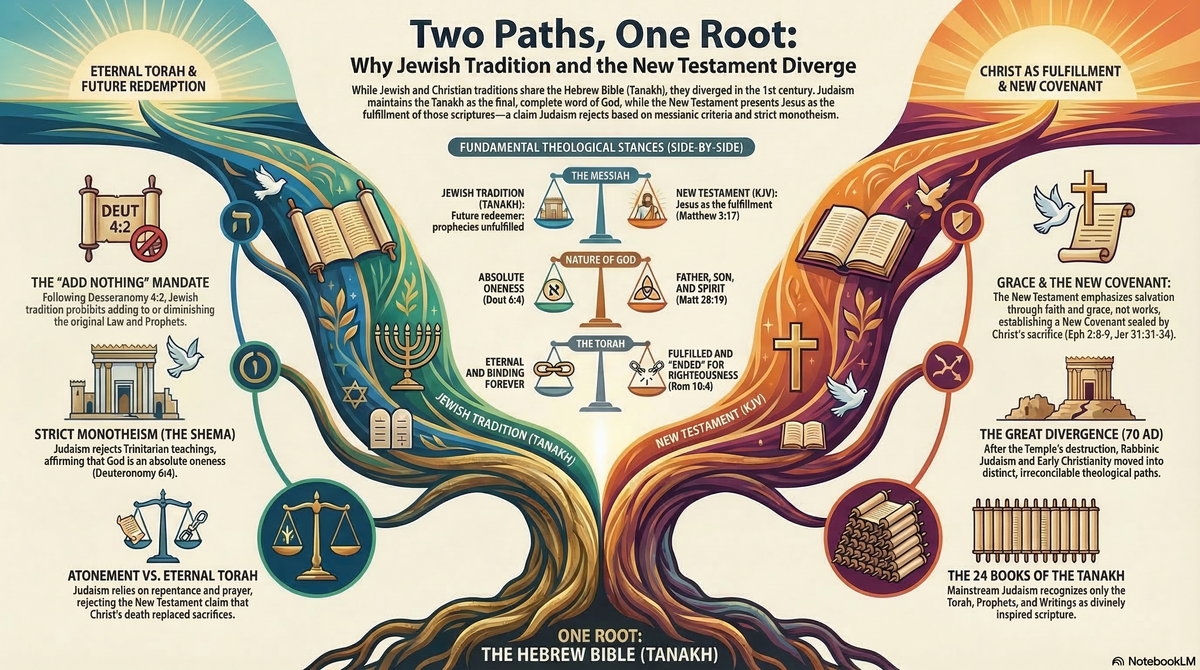
Jewish traditions do not follow the New Testament; mainstream Judaism (Orthodox, Conservative, Reform, and most others) regards only the Tanakh (Hebrew Bible / Christian Old Testament) as authoritative Scripture, viewing the New Testament as a Christian text without divine inspiration or role in Jewish faith, practice, or law. Core divergences include unfulfilled messianic prophecies, strict monotheism versus Trinitarian teachings, ongoing Torah observance versus claims of fulfillment in Christ, and rejection of replacement theology. From a KJV Bible perspective, the New Testament presents Jesus as the fulfillment of the Law and Prophets (Matthew 5:17), yet this claim marks the historical and theological parting of ways. Christians honor Jewish roots, pray for Israel's salvation (Romans 10:1; 11:26), and approach differences with humility and love.
Introduction
Have you ever wondered why the Jewish people, who gave us the Scriptures and the Messiah according to the flesh (Romans 9:5, KJV), do not accept the New Testament as part of their sacred writings? The question do Jewish traditions follow the New Testament KJV Bible touches the heart of biblical revelation, covenant faithfulness, and the mysterious ways God has worked through history.
In the King James Version, we read that "the oracles of God" were committed to the Jewish people (Romans 3:2), and salvation itself "is of the Jews" (John 4:22). Yet since the first century, Judaism and Christianity have followed distinct paths. Jewish religious life—Shabbat, kosher observance, festivals, prayer, and ethical living—draws exclusively from the Tanakh (Torah, Prophets, Writings), the Talmud, Midrash, and later rabbinic codes. The New Testament, written in the 1st century by Jewish followers of Jesus, is not considered inspired Scripture in Judaism.
This matters deeply today amid growing interest in biblical roots, interfaith dialogue, and questions about God's promises to Israel. Misunderstandings can fuel division, while careful study fosters respect and prayerful hope. This post examines the Jewish canon, reasons for non-acceptance of the New Testament, key theological differences, the Christian perspective of fulfillment in Christ, and a biblical call to love—all grounded in KJV texts with balanced, reverent exposition.

The Canon of Jewish Scripture: Tanakh Alone
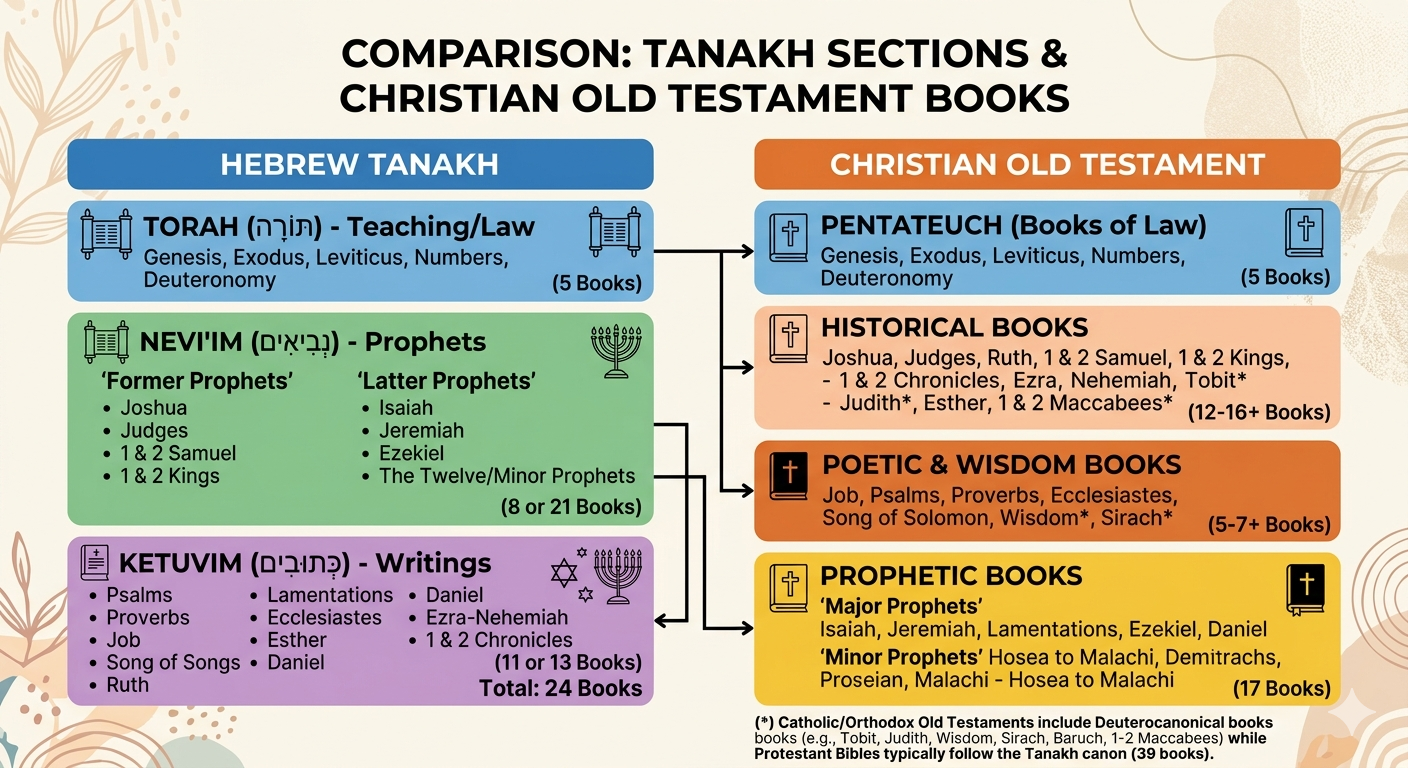
Jewish tradition holds the Tanakh as complete and authoritative—the Torah (Law), Nevi'im (Prophets), and Ketuvim (Writings). This is the Hebrew Bible Christians call the Old Testament.
Deuteronomy 4:2 (KJV) warns: "Ye shall not add unto the word which I command you, neither shall ye diminish ought from it." Jewish fidelity to this command has preserved the canon unchanged for millennia, viewing it as the inspired, eternal Word of God.
The New Testament—Gospels, Acts, Epistles, Revelation—was composed in the 1st century among early believers in Jesus as Messiah. Mainstream Judaism does not accept these writings as divinely inspired or part of Scripture. They appear in neither synagogue liturgy, rabbinic teaching, halakhic (legal) decisions, nor devotional study.
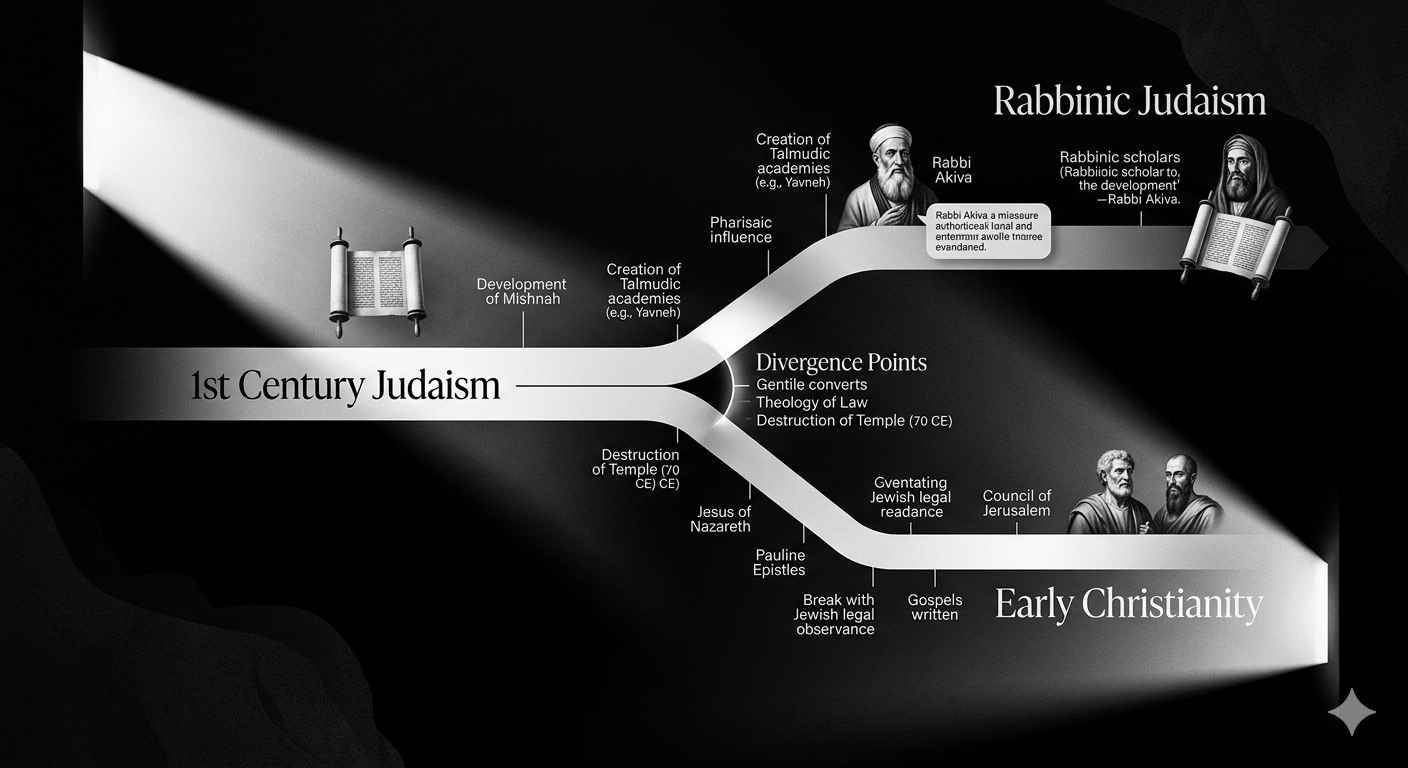
Historical context: After the Temple's destruction in AD 70, Rabbinic Judaism consolidated around the Tanakh and oral traditions (later codified in Mishnah and Talmud). The New Testament emerged in a period of divergence, viewed as reflecting a sect that separated from normative Judaism.
Nuance and edge case: Some Jewish scholars study the New Testament academically for 1st-century Jewish history (Jesus, apostles, and Paul were Torah-observant Jews), but this is historical/cultural, never devotional or authoritative.
Why Jewish Traditions Do Not Follow the New Testament
Divergence arises from fundamental, irreconcilable differences in interpreting shared Scriptures.
Messianic Identity and Unfulfilled Prophecies
Judaism expects the Messiah to:
- Rebuild the Temple
- Gather exiles
- Establish universal peace
- Bring all nations to know God
Cross-references: Isaiah 2:2–4; Ezekiel 37:21–28; Micah 4:1–3 (KJV).
These remain unfulfilled, so Jesus is not accepted as Messiah. New Testament claims (e.g., Matthew 27:37: "This is Jesus the King of the Jews") are seen as incompatible.
Strict Monotheism
Judaism affirms absolute oneness: "Hear, O Israel: The LORD our God is one LORD" (Deuteronomy 6:4, KJV). New Testament teachings on the Trinity and Jesus' divinity (John 10:30: "I and my Father are one") introduce plurality rejected by Jewish law.
Atonement and Eternal Torah
Post-Temple, Judaism relies on repentance, prayer, charity, and observance (Hosea 14:2 paraphrase). New Testament presents Jesus' death as final atonement (1 Corinthians 15:3; Hebrews 10:10–14), rendering sacrifices obsolete—a shift Judaism rejects. Torah remains eternal (Psalm 119:89: "For ever, O LORD, thy word is settled in heaven").
Covenant Continuity vs. Secessionism
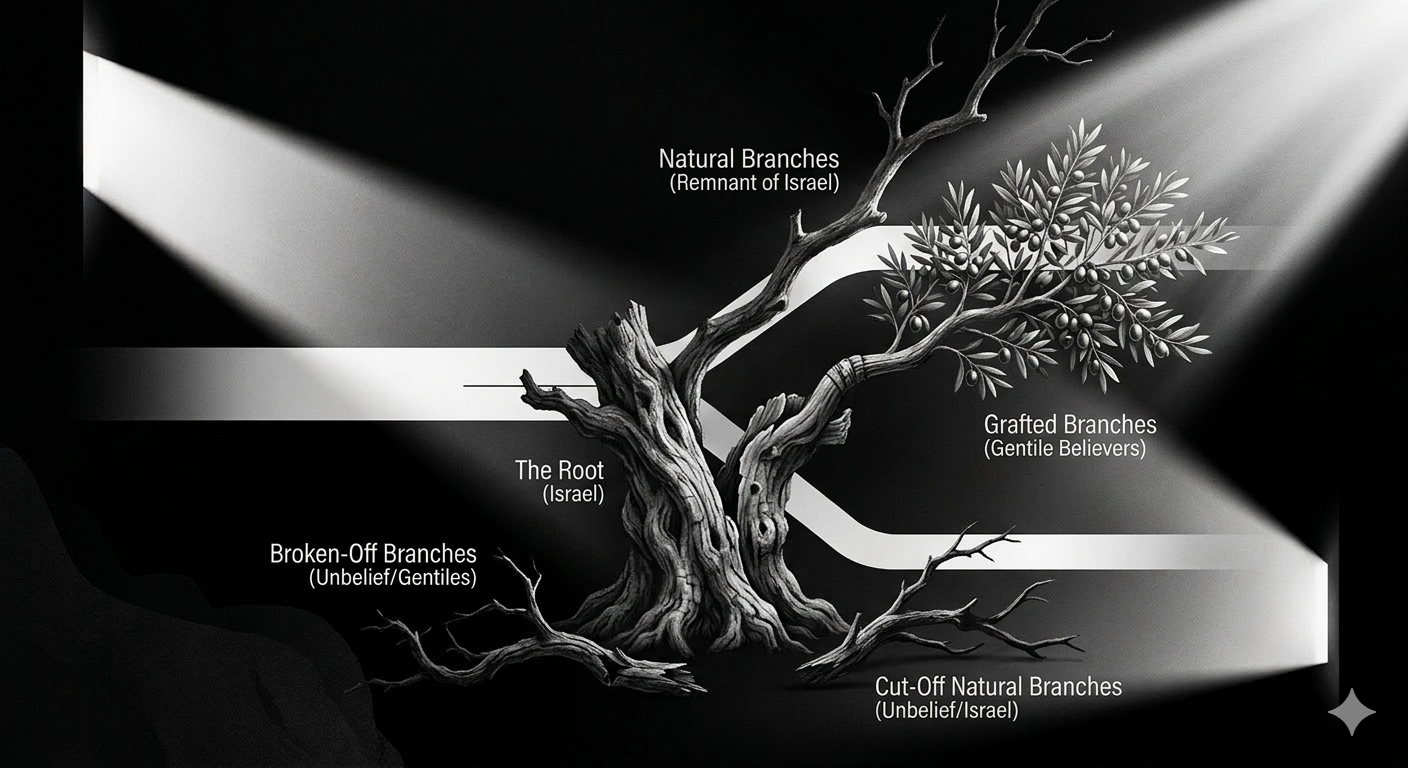
Judaism sees itself as heir to Abraham's irrevocable covenant (Romans 11:29: "the gifts and calling of God are without repentance"). Some New Testament passages (Galatians 6:16: "the Israel of God") suggest fulfillment in the Church, perceived as replacement theology.
Table: Key Theological Differences
Christian Perspective: Fulfillment in Messiah Jesus
The New Testament claims not to abolish but fulfill the Law and Prophets: "Think not that I am come to destroy the law, or the prophets: I am not come to destroy, but to fulfil" (Matthew 5:17, KJV). Jesus announced fulfillment (Luke 4:21), and apostles taught the Law as schoolmaster to Christ (Galatians 3:24).
Paul, once a Pharisee, declared Christ "the end of the law for righteousness to every one that believeth" (Romans 10:4), yet prayed earnestly for Israel's salvation (Romans 10:1) and affirmed God's faithfulness (Romans 11:26: "all Israel shall be saved").
Balanced interpretation: Christians see continuity and completion; Judaism sees innovation. Both affirm God's unchanging character.
Common Questions / FAQs
Do Jewish traditions accept any part of the New Testament KJV Bible?
No—mainstream Judaism views it as Christian Scripture only, with no authority in Jewish faith or practice.
Why doesn't Judaism accept Jesus as Messiah according to the KJV Bible?
Prophecies like world peace and Temple rebuilding (Isaiah 2; Ezekiel 37) remain unfulfilled, so expectations await a future Messiah.
How does Judaism view the Trinity in the New Testament?
As incompatible with strict monotheism (Deuteronomy 6:4); any plurality in Godhead is rejected.
Does the New Testament replace Israel in God's plan KJV?
No—Romans 11 emphasizes irrevocable calling and future salvation for Israel, with Gentiles grafted in.
Can Jews study the New Testament without converting to Christianity?
Yes, academically or historically (e.g., for 1st-century context), but not devotionally or as Scripture.
What does Romans 11 say about Jewish salvation in KJV?
God has not cast away His people; a remnant exists, and "all Israel shall be saved" after Gentile fullness (Romans 11:1, 25–26).
How should Christians approach Jewish traditions today?
With honor, love, and prayer—recognizing shared roots and God's faithfulness (Psalm 122:6; Romans 11:18).
Is Messianic Judaism considered Jewish tradition?
Mainstream Judaism generally does not recognize it, viewing acceptance of New Testament doctrines as aligning with Christianity.
Conclusion
The question do Jewish traditions follow the New Testament KJV Bible receives a clear answer: no. Jewish faith faithfully upholds the Tanakh as complete revelation, preserving ancient covenants while awaiting messianic fulfillment. Core differences—messianic criteria, God's oneness, atonement, and covenant continuity—explain this divergence without diminishing mutual respect for shared heritage.
From the KJV perspective, the New Testament proclaims Jesus as fulfillment of promise, yet honors Israel's role in salvation history. Paul’s heartfelt prayer (Romans 10:1) and vision of united worship (Romans 11:26) invite Christians to humility, gratitude, and intercession rather than pride or confrontation.
Key takeaways:
- The Tanakh remains foundational and eternal.
- Theological differences are profound but rooted in sincere interpretation of Scripture.
- God's promises endure; love and prayer bridge divides.
Beloved reader, reflect: How does understanding these distinctions deepen your appreciation of God's Word? Pray for the peace of Jerusalem (Psalm 122:6) and for eyes to behold the Messiah. Study Romans 9–11 in your own KJV Bible, asking the Spirit for wisdom. Share your thoughts below—what aspect of this topic stirs your heart most?
Explore more KJV deep dives in our Bible history and theology category for continued encouragement. May the God of Abraham, Isaac, Jacob—and our Lord Jesus Christ—guide us all in truth and love. Amen.