Embracing Timeless Wisdom for Daily Decisions and Moral Living
Discover the core teachings of Proverbs for making godly decisions, cultivating moral character, and walking in divine wisdom every day.
In an age of information overload, fleeting opinions, and moral confusion, the book of Proverbs stands as a lighthouse of unchanging divine counsel. The phrase “Essentials of Proverbs: Wisdom for Daily Decisions and Moral Living” captures the very heartbeat of this remarkable portion of Scripture. Written primarily by King Solomon, whom the Lord granted unparalleled wisdom (1 Kings 3:12), and supplemented by other wise men, Proverbs is not abstract philosophy but practical, street-level instruction for real life. It teaches us how to navigate relationships, work, money, speech, anger, sexuality, parenting, leadership, and every sphere of human existence under the fear of the Lord. This book aligns perfectly with the broader biblical theme that true wisdom begins with reverence for God and flows into every decision we make, echoing the covenant life God desires for His people.
Scriptural Exposition: The Foundational Voice of Proverbs
The book opens with its majestic purpose statement:
Proverbs 1:2-7 (KJV)
“To know wisdom and instruction; to perceive the words of understanding; To receive the instruction of wisdom, justice, and judgment, and equity; To give subtilty to the simple, to the young man knowledge and discretion… The fear of the LORD is the beginning of knowledge: but fools despise wisdom and instruction.”
NKJV rendering for clarity:
“The fear of the LORD is the beginning of knowledge, but fools despise wisdom and instruction.”
Everything in Proverbs flows from this single hinge: the fear of the LORD. This is not terror, but reverential awe, loving submission, and the recognition that God is God and we are not. Without this posture, all other knowledge becomes foolishness.
Throughout the book we encounter repeated contrasts:
- The wise man vs. the fool
- The righteous vs. the wicked
- The diligent vs. the sluggard
- The truthful vs. the liar
- The humble vs. the proud
- The one who guards his mouth vs. the one who speaks rashly
These are not merely moral categories; they represent two fundamental ways of being in the world—one oriented toward God and life, the other toward self and death.
Key foundational verses include:
Proverbs 3:5-6 (KJV)“Trust in the LORD with all thine heart; and lean not unto thine own understanding. In all thy ways acknowledge him, and he shall direct thy paths.”
Proverbs 4:23 (KJV)“Keep thy heart with all diligence; for out of it are the issues of life.”
Proverbs 15:3 (KJV)“The eyes of the LORD are in every place, beholding the evil and the good.”
Proverbs 16:9 (KJV)“A man’s heart deviseth his way: but the LORD directeth his steps.”
Proverbs 22:6 (KJV)“Train up a child in the way he should go: and when he is old, he will not depart from it.”
Proverbs 27:1 (KJV)“Boast not thyself of to morrow; for thou knowest not what a day may bring forth.”
These verses establish the essential framework: human responsibility meets divine sovereignty; personal discipline meets grace; daily choices matter eternally.
Reflective Insights: The Deeper Wisdom of God in Proverbs
Proverbs sits between the poetic cries of Job and the melancholy realism of Ecclesiastes, forming a wisdom trilogy. While Job wrestles with suffering and Ecclesiastes confronts the vanity of life under the sun, Proverbs gives us the practical “how” of living well within the tension of a fallen yet redeemable world.
The wisdom literature consistently teaches that wisdom is personal—Lady Wisdom in Proverbs 8 is portrayed almost as a divine companion, and New Testament believers recognize this as a foreshadowing of Christ Himself, “in whom are hid all the treasures of wisdom and knowledge” (Colossians 2:3).
Consider the repeated warnings against adultery (Proverbs 5, 6:20–7:27). These are not merely rules against immorality; they are passionate pleas from a father who knows the destructive power of sin upon the soul, the family, and ultimately one’s relationship with God. The same intensity appears in warnings against the sluggard, the gossip, the proud, and the one who loves pleasure more than righteousness.
Paul would later summarize the moral vision of Proverbs when he wrote:
Ephesians 5:15-17
“See then that ye walk circumspectly, not as fools, but as wise, Redeeming the time, because the days are evil. Wherefore be ye not unwise, but understanding what the will of the Lord is.”
Proverbs anticipates the Sermon on the Mount. Jesus’ teaching on anger (Matthew 5:21-22), lust (Matthew 5:27-28), oaths (Matthew 5:33-37), retaliation (Matthew 5:38-42), and love for enemies (Matthew 5:43-48) can be seen as the fulfillment and deepening of Solomonic wisdom.
In Revelation 3:18, the risen Christ still counsels the lukewarm Laodicean church to buy from Him “gold tried in the fire… and white raiment… and eyesalve” — language saturated with Proverbs’ imagery of refined character, righteous covering, and spiritual discernment.
Practical Applications: Living the Proverbs Today
Guided Morning Prayer (to be prayed daily)Heavenly Father, Creator of wisdom and giver of understanding, I come before You this day acknowledging that the fear of the LORD is the beginning of knowledge. Search my heart, O God. Guard my steps. Keep my tongue from evil and my lips from speaking guile. Grant me discernment in every decision, humility in every success, and courage in every trial. Let me walk today in the path of the just, which shines brighter and brighter unto the perfect day. In Jesus’ name, Amen.
Deep-Dive Reflection Questions
Group Discussion Prompts (8–12 prompts)
- Which area of your life most needs the “fear of the LORD” right now—finances, speech, relationships, work ethic, sexual purity, parenting, time management?
- How does Proverbs 3:5-6 challenge your current decision-making process?
- In what ways do you see the contrast between the wise and the fool playing out in modern culture?
- How has careless speech damaged relationships in your life? What would Proverbs counsel?
- What does diligence vs. laziness look like in your vocation and in your spiritual life?
- Reflect on Proverbs 15:1 – “A soft answer turneth away wrath.” When have you experienced this truth?
- How do the warnings against adultery and pornography in our day echo Proverbs 5–7?
- How does the portrait of the virtuous woman in Proverbs 31 challenge and inspire both men and women today?
- Which proverb most convicts you personally right now? Why?
- How does trusting God with your future (Prov. 3:5-6) differ from fatalism or anxiety?
- In what practical ways can you “keep your heart” (Prov. 4:23) in a digital age?
- How might the principles of Proverbs transform your workplace, family, and church community?
Worksheet Idea: Create a “Seven-Day Proverbs Challenge” journal. Each day select one major theme (speech, diligence, humility, relationships, money, anger, planning). Write the key verses, record one observation, one conviction, and one concrete action step.
Key Takeaways and Suggested 7-Day Study Plan
Seven Essential Lessons from Proverbs
- The fear of the LORD is the foundation of all true wisdom and knowledge.
- Character is revealed and formed through daily, small decisions.
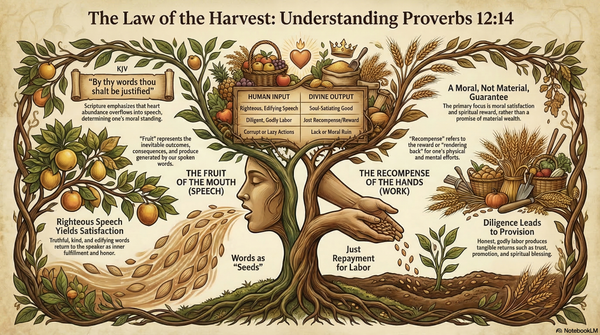
- Speech has life-and-death power; we must guard our tongue diligently.
- Diligence, discipline, and foresight lead to blessing; laziness and impulsiveness lead to ruin.
- Pride precedes destruction; humility attracts grace.
- Righteousness in relationships (marriage, parenting, friendship, business) is a primary measure of wisdom.
- God sovereignly directs our steps even as we responsibly plan.
Simple 7-Day Proverbs Immersion Plan
- Day 1 – The Beginning of Wisdom (Proverbs 1:1–7; 9:10)
- Day 2 – Trusting God vs. Self-Reliance (Proverbs 3:5-12)
- Day 3 – Guarding the Heart & Tongue (Proverbs 4:20-27; 15:1-4; 18:21)
- Day 4 – Diligence vs. Sloth (Proverbs 6:6-11; 10:4-5; 24:30-34)
- Day 5 – Pride, Humility, and Honor (Proverbs 11:2; 15:33; 16:18; 18:12; 22:4)
- Day 6 – Moral Purity and the Marriage Covenant (Proverbs 5; 6:20–7:27; 31:10-31)
- Day 7 – God’s Sovereignty and Human Responsibility (Proverbs 16:1-9; 19:21; 21:1,30-31)
Read the assigned passages aloud, meditate for 10-15 minutes, journal one insight, and pray the day’s theme into your life.
Conclusion: An Invitation to Walk in Wisdom
Beloved, the book of Proverbs is not a collection of nice sayings; it is God’s authoritative guidebook for living skillfully in His world. It calls us to choose the path of life over the way of death, the way of wisdom over the way of folly, every single day.
As you close this reflection, hear the gracious invitation of Wisdom herself:
Proverbs 8:32-35 (KJV, adapted)
“Now therefore hearken unto me, O children: for blessed are they that keep my ways… For whoso findeth me findeth life, and shall obtain favour of the LORD.”
May you find Wisdom—may you find Christ—and in finding Him, discover the life abundant that He promised. Walk wisely, beloved. The Lord is with you, directing your steps, guarding your heart, and working all things together for your good and His glory.
Go in peace, and in the wisdom that comes from above. Amen.