Jeremiah 29:11: Discovering God's Plans for Hope and a Future in Times of Uncertainty
Uncover the hope in Jeremiah 29:11—God's good plans for your prosperity and future. Practical encouragement for uncertain times.
Beloved in the Lord, in seasons of uncertainty—when trials press upon us, when the path ahead seems shrouded in darkness, and when our hearts grow weary from waiting—we turn to the timeless promise of Jeremiah 29:11. This beloved verse speaks directly to the soul searching for assurance amid exile-like circumstances, reminding us that the sovereign God holds purposeful designs for His people. It aligns with the broader biblical themes of God's unchanging faithfulness seen in His covenants with Abraham, the deliverance from Egypt, the prophetic calls to repentance, and ultimately fulfilled in the redemptive work of Christ Jesus. From Genesis to Revelation, Scripture reveals a God who orchestrates history not for our harm, but for our eternal good, weaving threads of hope through suffering, restoration through judgment, and glory through perseverance.
Scriptural Exposition
Let us first examine the word of God as delivered through the prophet Jeremiah to the captives in Babylon. In the King James Version, Jeremiah 29:11 declares:
"For I know the thoughts that I think toward you, saith the LORD, thoughts of peace, and not of evil, to give you an expected end."
For greater clarity, consider the New King James Version rendering: "For I know the thoughts that I think toward you, says the LORD, thoughts of peace and not of evil, to give you a future and a hope." Here, the Hebrew word for "thoughts" conveys divine intentions or plans—purposeful, deliberate designs formed in the mind of God Himself. "Peace" translates from shalom, encompassing wholeness, welfare, and prosperity in the deepest sense. "Not of evil" assures no ultimate calamity, while "a future and a hope" (or "expected end") points to a destined outcome of blessing and fulfillment.
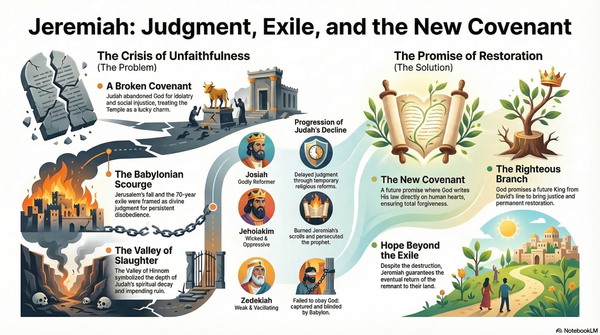
This promise does not stand alone but emerges from the context of Jeremiah's letter to the exiles (Jeremiah 29:1-14). The people of Judah had been carried away captive to Babylon as divine judgment for their idolatry and disobedience (Jeremiah 25:8-11). False prophets deceived them with promises of quick return (Jeremiah 28), but God, through Jeremiah, instructs them to settle in Babylon—build houses, plant gardens, marry, and seek the peace of the city (Jeremiah 29:5-7). The captivity would last seventy years (Jeremiah 29:10), a time of refining rather than immediate deliverance.
Yet in verse 11, the Lord reveals His heart: His thoughts are of peace, culminating in restoration. Verses 12-14 expand this:
"Then shall ye call upon me, and ye shall go and pray unto me, and I will hearken unto you. And ye shall seek me, and find me, when ye shall search for me with all your heart. And I will be found of you, saith the LORD: and I will turn away your captivity…
"In modern expression, preserving the meaning: "Then you will call upon Me and pray to Me, and I will listen to you. You will seek Me and find Me when you search for Me with all your heart. I will gather you and bring you back."
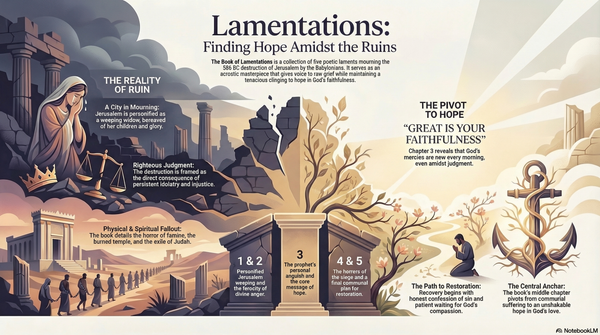
These images evoke the historical reality of the Babylonian exile, reminding us that God's promise came not in ease, but amid profound displacement.
Cross-referencing other Scriptures enriches our understanding. In Deuteronomy 30:1-5, God foretells restoration after scattering for sin. Psalm 40:5 speaks of God's thoughts toward us as innumerable and good. In the New Testament, Romans 8:28 echoes this: "And we know that all things work together for good to them that love God, to them who are the called according to his purpose." Ephesians 2:10 reveals we are created in Christ for good works prepared beforehand.
Such visual representations of the verse capture its inspirational essence—a sunrise of hope dawning over uncertainty.
Reflective Insights
The authority of God shines forth in this passage: "Thus saith the LORD"—a declaration of unassailable sovereignty. In times of uncertainty, we are tempted, like the exiles, to listen to false voices promising quick relief or self-made prosperity. Yet Jeremiah calls us to patient trust in God's timeline. As in Job 42:2, "I know that thou canst do every thing, and that no thought can be withholden from thee"—the Lord knows His plans perfectly, while we see only dimly.
Meditate on the Psalms: David cries in Psalm 42:5, "Why art thou cast down, O my soul? and why art thou disquieted in me? hope thou in God." Proverbs 23:18 reminds, "For surely there is an end; and thine expectation shall not be cut off." Ecclesiastes 3:11 affirms God "hath made every thing beautiful in his time," even when seasons feel prolonged.
In the Gospels, Jesus embodies this hope amid suffering. On the cross, uncertainty peaked, yet His resurrection unveiled the Father's plan for eternal peace (John 16:33: "In the world ye shall have tribulation: but be of good cheer; I have overcome the world"). The epistles deepen this: In 2 Corinthians 4:17-18, Paul writes of light afflictions working an eternal weight of glory as we look to the unseen. Hebrews 11 recounts faith heroes who endured exile-like trials, not receiving the promise immediately, yet trusting God's future.
Revelation crowns it all: The Lamb's victory ensures a new heaven and earth where former sorrows flee (Revelation 21:4). Thus, Jeremiah 29:11 invites philosophical depth—life's meaning lies not in circumstantial ease but in alignment with God's redemptive purpose. Morality flows from seeking Him wholeheartedly; purpose emerges in faithful obedience amid waiting. Uncertainty refines us, stripping self-reliance and fostering dependence on the God whose thoughts toward us are infinitely good.
Practical Applications
To apply this truth, let us engage in guided prayer and reflection.
Guided Prayer:
Heavenly Father, in this moment of uncertainty, I call upon You as promised in Jeremiah 29. Reveal Your thoughts of peace toward me. Forgive my impatience and distrust. Help me seek You with all my heart, trusting Your plans surpass my understanding. Restore hope where despair lingers, and grant grace to bloom where planted. In Jesus' name, Amen.
Devotional Worksheet: Deep-Dive Reflection Prompts
(Use individually, in small groups, or under pastoral guidance. Journal responses prayerfully.)
- Describe your current "exile"—areas of uncertainty, loss, or waiting. How does it mirror the Babylonian captivity?
- Read Jeremiah 29:4-7. What does "seeking the peace of the city" look like in your present circumstances (work, family, community)?
- In what ways have you listened to "false prophets" promising quick fixes? Confess and renounce them.
- List three "thoughts of peace" God has shown you in past trials. How do they build trust for the future?
- How does Romans 8:28 connect to Jeremiah 29:11 in your life story?
- Pray verse 12-13 personally: Where do you need to seek God more wholeheartedly?
- Identify one act of obedience this week that demonstrates trust in God's long-term plan (e.g., serving others, persevering in prayer).
- How might suffering refine your character, as in James 1:2-4?
- Share with a fellow believer: How has God turned a past "calamity" into good?
- Envision your "expected end"—what eternal hope in Christ anchors you?
- If facing despair, meditate on Psalm 130:5-7. What does waiting on the Lord entail practically?
- Commit to praying for enemies or difficult situations, as the exiles prayed for Babylon's peace.
These prompts foster personal growth, group discussion, or sermon illustration.
Key Takeaways and Study Plan
Key Takeaways:
- God's plans are known to Him alone—purposeful, peaceful, and ultimately good.
- Hope often comes through prolonged seasons of faithfulness, not immediate rescue.
- Seeking God wholeheartedly is the pathway to experiencing His presence and restoration.
- Uncertainty is an opportunity for refinement and deeper trust.
- This Old Testament promise finds fulfillment in Christ's eternal kingdom.
- True prosperity is spiritual shalom, not merely material ease.
- We are called to active obedience and prayer amid waiting.
Simple 5-Day Study Plan:
Day 1: Read Jeremiah 29:1-14 slowly. Journal context and personal parallels.
Day 2: Meditate on verses 11-13 with NKJV comparison. Pray the guided prayer.
Day 3: Cross-reference with Romans 8:28-39 and Hebrews 11. Note connections to hope.
Day 4: Complete 6-8 worksheet prompts. Discuss with a trusted friend if possible.
Day 5: Reflect on Revelation 21. Worship, thanking God for your future in Him.
Conclusion
In summary, Jeremiah 29:11 unveils the heart of a faithful God who, even in judgment, proposes peace and a glorious future for those who seek Him. From exile to eternity, His plans prevail, transforming uncertainty into testimonies of grace. Beloved, take heart: The Lord who spoke to captives long ago speaks to you today. Your future is secure in His hands—not free from trials, but filled with hope that anchors the soul. Press on in faith, seeking Him diligently, for He is faithful to bring you into the fullness of His promised end.
May the peace of God guard your hearts and minds in Christ Jesus. Amen