Life and Conversion of Apostle Paul in KJV Bible
Explore the dramatic life and conversion of the Apostle Paul in the KJV Bible—from Saul's persecution to his Damascus Road encounter and ministry to Gentiles. Discover grace, key verses, and lasting lessons for today.

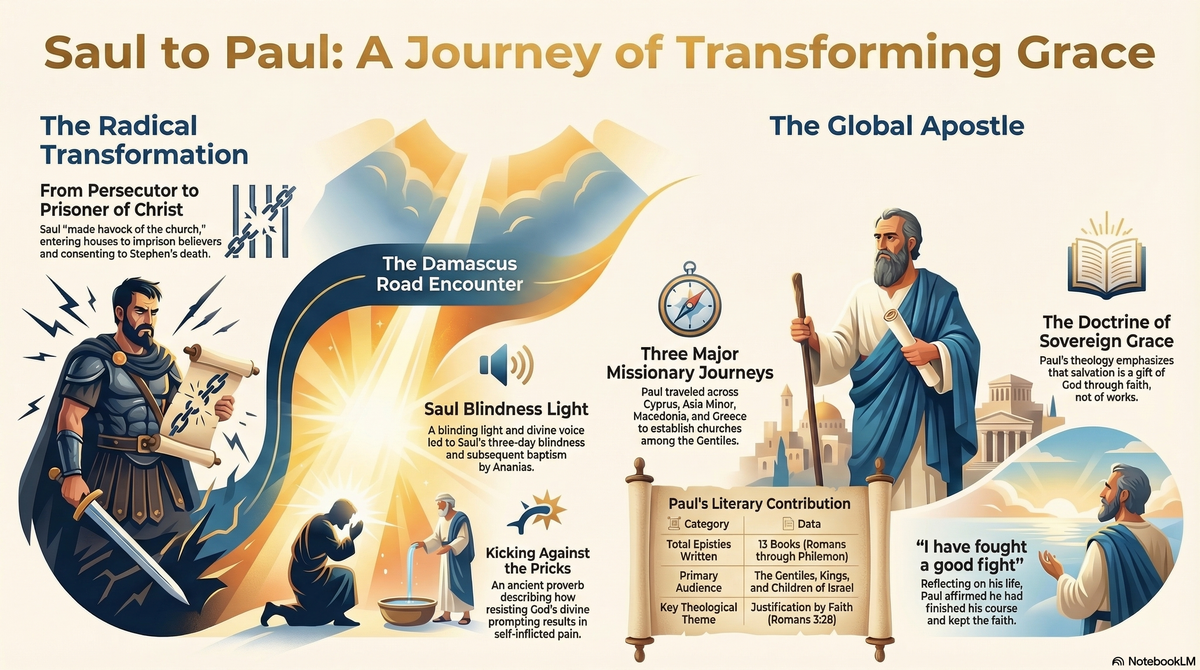
The life and conversion of the Apostle Paul in the KJV Bible reveal God's sovereign grace transforming a fierce persecutor into the greatest missionary to the Gentiles. Once Saul of Tarsus, a zealous Pharisee who ravaged the early church and consented to Stephen's death, he encountered the risen Christ on the road to Damascus, where a blinding light and divine voice led to his surrender, baptism, and calling. Paul's ministry spread the gospel across the Roman world through journeys filled with trials, while his epistles emphasize justification by faith, grace over law, and love. This story shows no one is beyond redemption, encouraging believers to embrace grace and faithful service.
Introduction
Have you ever wondered how someone could go from violently opposing Christianity to becoming its most influential advocate? The life and conversion of the Apostle Paul in the KJV Bible offers one of the most powerful testimonies of divine transformation in all of Scripture. Once known as Saul of Tarsus, he was a man consumed by religious zeal that blinded him to the truth of Christ—yet God sovereignly intervened, turning his enmity into eternal mission.
In the King James Version, Paul's story unfolds primarily in the Book of Acts and his own epistles, showcasing the transforming power of grace. As Acts 9:15 (KJV) records God's words to Ananias: "he is a chosen vessel unto me, to bear my name before the Gentiles, and kings, and the children of Israel." This calling came not through human merit but through Christ's direct revelation, highlighting themes of mercy for the chief of sinners (1 Timothy 1:15, KJV).
Why does this matter today? In an age of doubt, division, and personal struggles, Paul's journey reminds us that radical change is possible through encounter with Christ. No background—be it religious legalism, past sins, or opposition—disqualifies one from God's purposes. This post explores his pre-conversion persecution, the dramatic Damascus Road moment, his apostolic ministry, theological emphases on grace, and enduring legacy, all drawn faithfully from KJV texts.
We'll examine historical and linguistic context, cross-references, common interpretations, and practical applications, aiming to deepen your appreciation of this pivotal biblical figure.
The Persecutor: Saul Before the Light
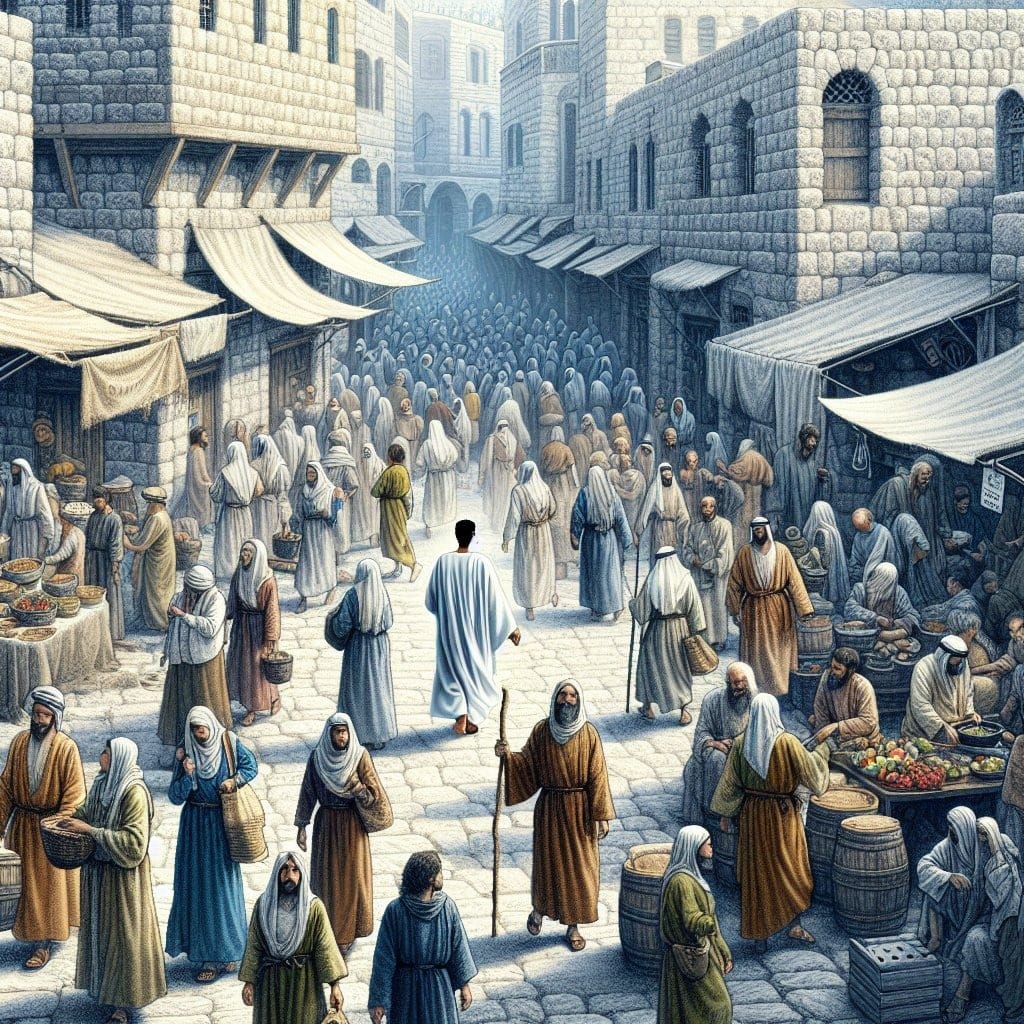
Before his conversion, Saul embodied zealous opposition to the early church. As a "Hebrew of the Hebrews; as touching the law, a Pharisee" (Philippians 3:5, KJV), trained under Gamaliel (Acts 22:3, KJV), he pursued the traditions of his fathers with unmatched fervor (Galatians 1:14, KJV).
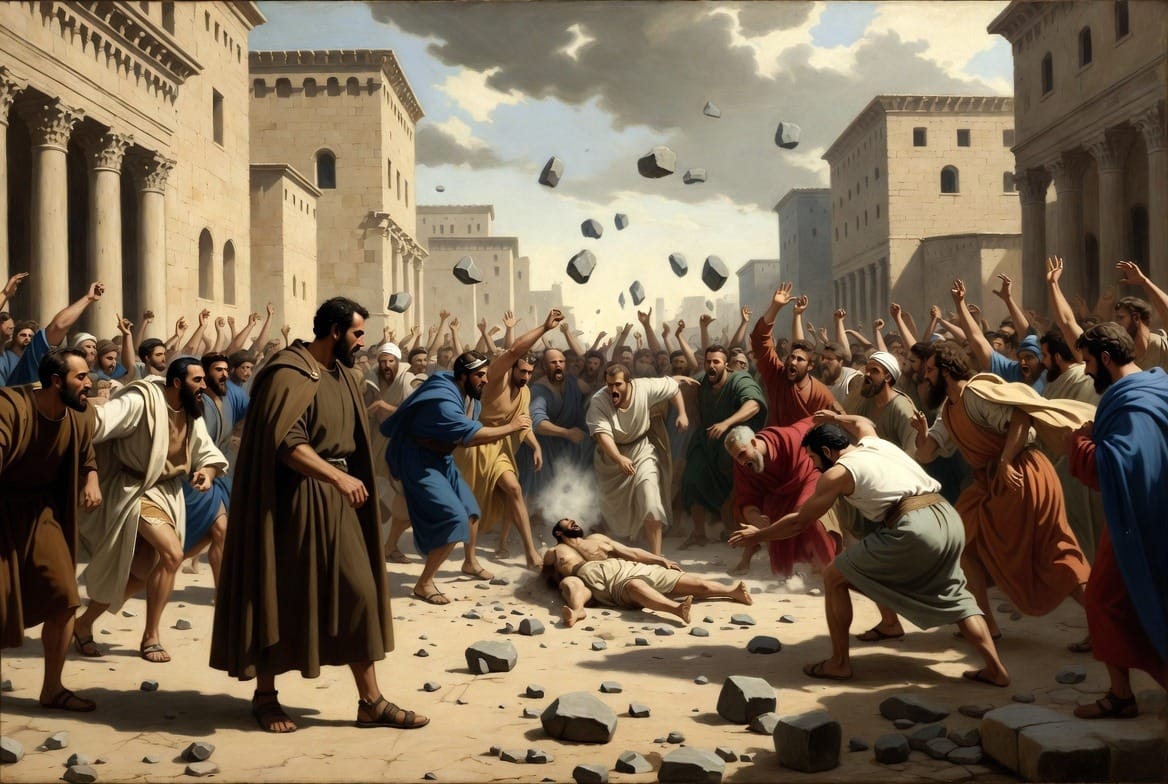
This zeal, however, led to violence. He "made havock of the church, entering into every house, and haling men and women committed them to prison" (Acts 8:3, KJV). He stood by at Stephen's stoning, guarding the witnesses' garments and consenting to his death (Acts 7:58–8:1, KJV). Breathing "threatenings and slaughter against the disciples of the Lord" (Acts 9:1, KJV), he secured letters to arrest followers of "the Way" in Damascus.
This reveals a sobering truth: religious devotion without divine revelation can oppose God's truth. As Proverbs 14:12 (KJV) warns, "There is a way which seemeth right unto a man, but the end thereof are the ways of death." Saul's actions echo humanity's natural enmity toward God (cf. Romans 8:7, KJV), even among the outwardly pious.
Nuance and edge case: Some misinterpret Saul's zeal as mere hypocrisy, but Scripture presents him as sincere yet misguided—highlighting that sincerity alone does not equate to truth.
The Damascus Road: The Moment of Sovereign Grace
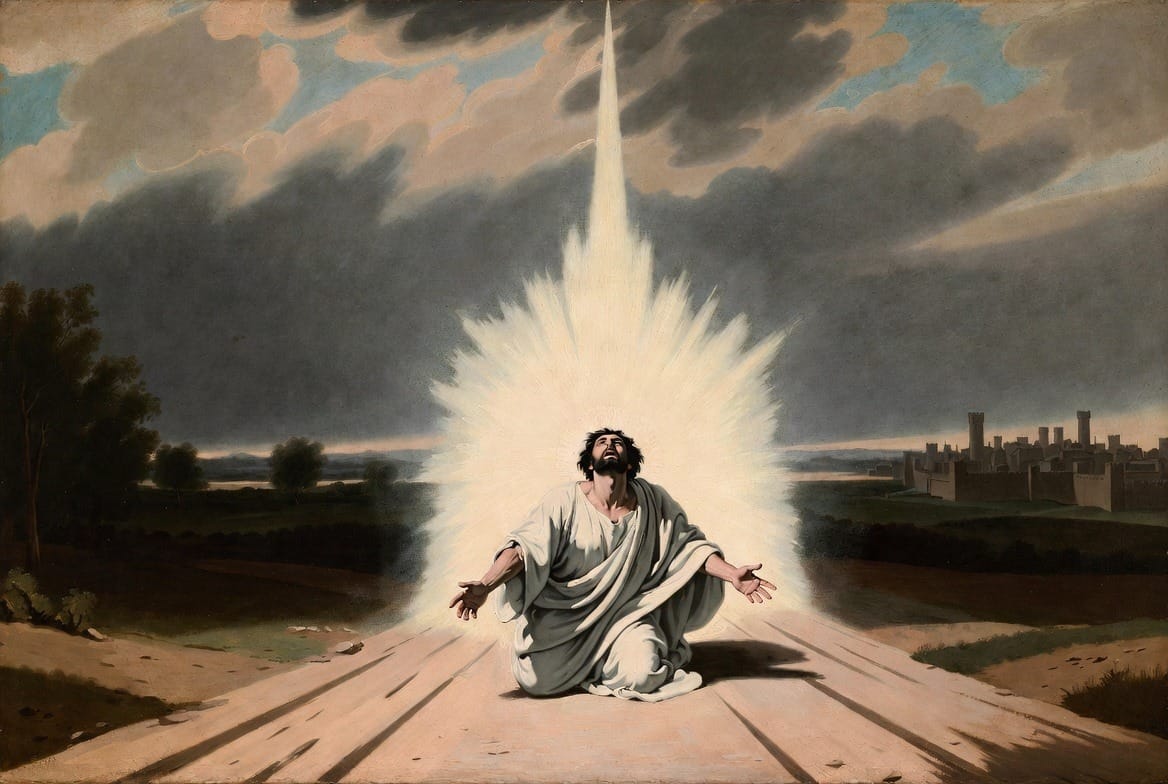
The turning point came suddenly. Journeying to Damascus, "suddenly there shined round about him a light from heaven" (Acts 9:3, KJV). Falling to the earth, he heard: "Saul, Saul, why persecutest thou me?" (Acts 9:4, KJV). Identifying Himself as "Jesus whom thou persecutest" (Acts 9:5, KJV), Christ added, "It is hard for thee to kick against the pricks" (Acts 9:5, KJV)—an ancient proverb meaning resistance to divine prompting brings self-inflicted pain.
Blinded for three days, Saul neither ate nor drank, praying fervently. God sent Ananias: "Brother Saul, the Lord, even Jesus... hath sent me, that thou mightest receive thy sight, and be filled with the Holy Ghost" (Acts 9:17, KJV). Scales fell from his eyes; he arose, was baptized, and "straightway he preached Christ in the synagogues that he is the Son of God" (Acts 9:20, KJV).
This encounter underscores sovereign grace—God chose Saul "from my mother's womb" (Galatians 1:15, KJV paraphrase in context). It was not earned but revealed.
Historical/language context: In 1611 KJV English, "pricks" referred to ox goads; resisting God's call was futile and painful. Cross-references include Paul's retellings (Acts 22:6–11; 26:12–18, KJV), confirming consistency.
Common misinterpretation: Some view it as hallucination or epilepsy, but the text's multiple accounts, companions' experiences, and immediate fruit argue for genuine supernatural intervention.
The Apostle to the Gentiles: Ministry and Missionary Journeys
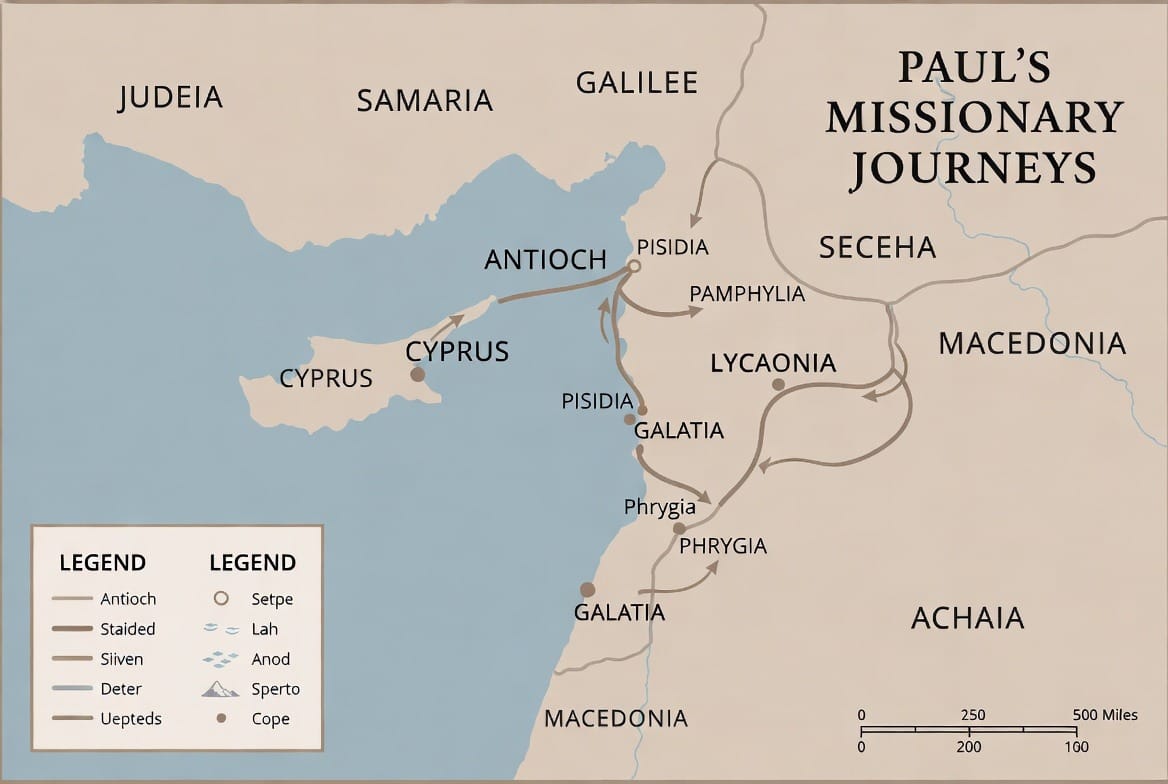
Called "not of men, neither by man, but by Jesus Christ" (Galatians 1:1, KJV), Paul received his gospel by revelation (Galatians 1:11–12, KJV). After Arabia and Damascus, he visited Jerusalem briefly (Galatians 1:18–19, KJV), then launched from Antioch on journeys spanning Cyprus, Asia Minor, Macedonia, and Greece (Acts 13–20, KJV).
He endured "labours more abundant" (2 Corinthians 11:23, KJV): beatings, stonings, shipwrecks, perils. Yet he affirmed, "I can do all things through Christ which strengtheneth me" (Philippians 4:13, KJV).
The Jerusalem Council affirmed his Gentile ministry (Acts 15, KJV). His epistles—Romans through Philemon—unfold mysteries: justification by faith (Romans 3:28; Galatians 2:16, KJV), grace abounding (Romans 5:20, KJV), unity in Christ (Ephesians 2:14–16; Galatians 3:28, KJV).
Practical application: Paul's perseverance amid suffering models endurance for modern believers facing opposition.
The Theology of Grace and the Call to Holiness
Paul's writings emphasize redemption by grace: "For by grace are ye saved through faith; and that not of yourselves: it is the gift of God: Not of works, lest any man should boast" (Ephesians 2:8–9, KJV). He proclaimed, "I am not ashamed of the gospel of Christ: for it is the power of God unto salvation to every one that believeth" (Romans 1:16, KJV).
Love reigns supreme: "Though I speak with the tongues of men and of angels, and have not charity, I am become as sounding brass, or a tinkling cymbal" (1 Corinthians 13:1, KJV). Hope culminates in resurrection: "Behold, I shew you a mystery; We shall not all sleep, but we shall all be changed" (1 Corinthians 15:51, KJV).
In prison, he reflected: "I have fought a good fight, I have finished my course, I have kept the faith" (2 Timothy 4:7, KJV).
Balanced interpretation: Grace does not negate holiness; it empowers it (Titus 2:11–12, KJV).
Common Questions / FAQs
What does "kick against the pricks" mean in Acts 9:5 KJV?
It refers to an ox kicking against a goad—futile resistance causing pain. It illustrates resisting God's call brings self-harm.
How many books of the Bible did Paul write in the KJV?
Thirteen: Romans through Philemon (some debate Hebrews' authorship).
Why did Paul go to Arabia after conversion (Galatians 1:17 KJV)?
Likely for revelation, reflection, and early preaching—avoiding immediate consultation with apostles to affirm divine calling.
Was Paul's conversion genuine or psychological?
Scripture presents it as supernatural; immediate preaching, transformed life, and consistent testimony across accounts support authenticity.
What happened to Paul at the end of his life?
Tradition holds martyrdom under Nero; his final words affirm faithful endurance (2 Timothy 4:7–8, KJV).
How does Paul's background help his ministry?
As Pharisee, Roman citizen, and multilingual, he bridged Jewish and Gentile worlds effectively.
Did Paul meet Jesus before the Damascus Road?
No—his encounter was post-resurrection; he was not among the original disciples.
Why emphasize grace over works in Paul's letters?
To counter legalism; salvation is God's gift, not human achievement.
Conclusion
The life and conversion of the Apostle Paul in the KJV Bible stands as an enduring monument to God's mercy. From breathing threats against believers to penning inspired words of life, Paul exemplifies the truth: "Christ Jesus came into the world to save sinners; of whom I am chief" (1 Timothy 1:15, KJV). His story is not merely historical—it's personal. It invites reflection: Where might God be calling you to surrender resistance? How has grace transformed your own path?
Paul's legacy challenges us to embrace grace fully, proclaim Christ boldly, and persevere through trials. No past sin or zeal misplaced can outstrip divine mercy. As he urged, let us "press toward the mark for the prize of the high calling of God in Christ Jesus" (Philippians 3:14, KJV).
Beloved reader, study these passages in your own KJV Bible. Allow the Holy Spirit to illuminate truths anew. Share your reflections in the comments—what aspect of Paul's journey speaks most to you? Explore more KJV deep dives in our Bible studies category for continued encouragement. May the same grace that called Paul call and strengthen you today. Amen.