Psalm 119 KJV Meaning: Structure, Themes & Deep Insights
Discover the profound meaning of Psalm 119 in the KJV Bible—the longest chapter celebrating God's Word. Explore its acrostic structure, key themes like delight in the law, affliction's lessons, and timeless applications for daily life and faith.

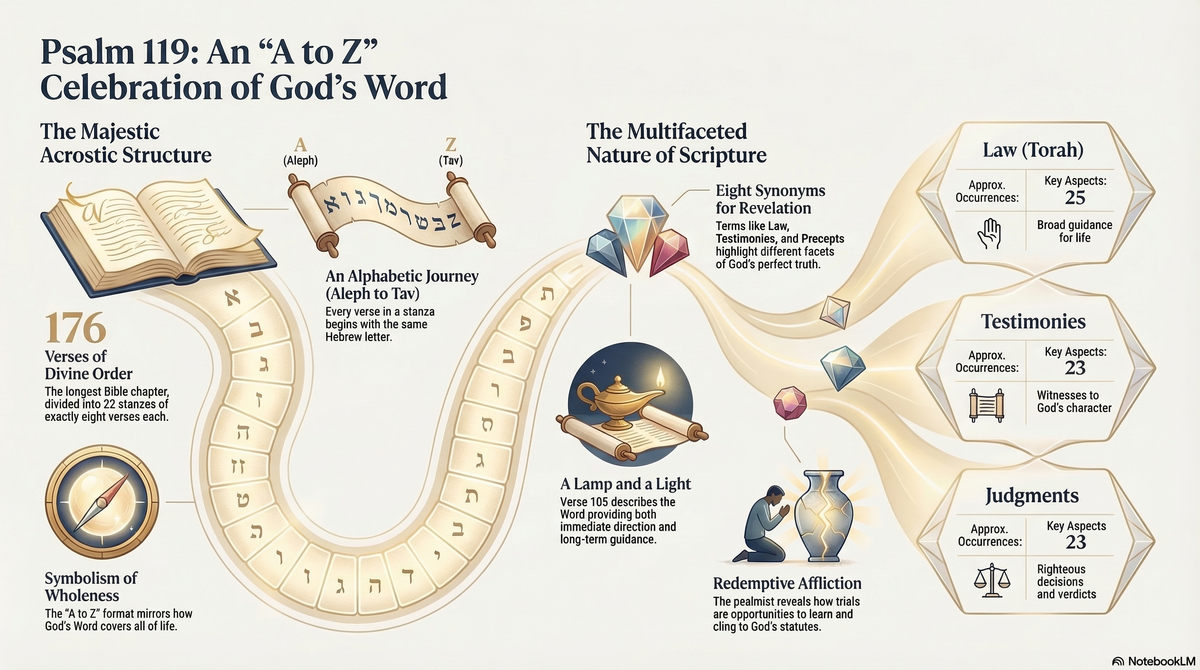
Psalm 119 in the KJV Bible, the longest chapter with 176 verses, is an alphabetic acrostic masterpiece praising God's Word through 22 stanzas (one per Hebrew letter), each with 8 verses starting with the same letter. It uses eight synonyms (law, testimonies, precepts, statutes, commandments, judgments, word, ordinances) to exalt Scripture as perfect, eternal, life-giving, and a guide amid trials. The psalmist expresses deep love, delight, and dependence on the Word for guidance ("Thy word is a lamp unto my feet, and a light unto my path" – v. 105), comfort in affliction, and victory over sin. Ultimately, it points to blessedness through wholehearted obedience and finds fulfillment in Christ, the living Word, urging modern believers to meditate on Scripture daily for revival and direction.
Introduction
What if the longest chapter in the Bible were dedicated entirely to one subject: an overflowing love for God's Word? Psalm 119 KJV meaning and structure explained reveals precisely that—a poetic masterpiece of 176 verses that stands as the Bible's most extensive celebration of Scripture itself. In the King James Version, this psalm pulses with reverence, portraying the Word not as a dry rulebook but as a living source of blessing, light, comfort, and strength.
Attributed traditionally to David (though some suggest Ezra or an anonymous afflicted saint, with no superscription confirming authorship), the psalmist speaks as one tested by persecution, slander, and weariness yet sustained by clinging to God's revelation. As our Lord Jesus quoted Deuteronomy in temptation—"Man shall not live by bread alone, but by every word that proceedeth out of the mouth of God" (Matthew 4:4, KJV)—Psalm 119 embodies this truth, showing Scripture as essential nourishment for the soul.
In today's world of shifting opinions and moral confusion, this psalm offers timeless relevance. It calls believers to delight in God's unchanging truth ("Oh how love I thy law! it is my meditation all the day" – v. 97), to find guidance in darkness, and to view trials as opportunities to learn His statutes. This deep dive explores the majestic acrostic structure, recurring synonyms for the Word, core themes of love, light, affliction, and prayer, theological connections to Christ, and practical ways to live it out today—all rooted in faithful KJV exposition.

The Majestic Structure: An Acrostic Masterpiece
Psalm 119's structure explained is one of its most striking features: an alphabetic acrostic using the 22 Hebrew letters from Aleph (א) to Tav (ת). Divided into 22 stanzas of exactly 8 verses each, every verse in a stanza begins with the same letter, creating a complete sweep from first to last.
This form symbolizes wholeness and divine order—the entire alphabet encompassed mirrors how God's Word covers all of life and truth. As Psalm 119:89 (KJV) declares: "For ever, O LORD, thy word is settled in heaven." The acrostic aids memorization (vital in oral cultures) and invites exhaustive meditation: letter by letter, the psalm saturates the heart with Scripture.
Historical/language context: In 1611 KJV English, terms like "statutes" (fixed decrees) and "precepts" (appointed instructions) retain their weight from Hebrew roots. The structure reflects God's orderly creation (cf. Proverbs 4:20–22, KJV: God's words bring "life unto those that find them, and health to all their flesh").
Nuance: While artistic, the form never feels forced; each verse organically exalts the Word. Edge case: A few verses lack direct reference, yet the theme remains unbroken.
The Eight Synonyms for God's Word: Facets of Divine Revelation
Nearly every verse (171 of 176) references God's Word using eight interlocking terms, each highlighting a different aspect:
- Law (Torah): Instruction, teaching (broad guidance for life).
- Testimonies: God's self-revelation, witnesses to His character.
- Precepts: Appointed rules, specific directives.
- Statutes: Engraved decrees, permanent ordinances.
- Commandments: Authoritative orders.
- Judgments/Oracles: Righteous decisions, verdicts.
- Word (Dabar/Imrah): Spoken promise or utterance.
- Ordinances: Equitable rulings.
These are not redundant; they form a multifaceted diamond, showing Scripture's perfection (v. 96: "I have seen an end of all perfection: but thy commandment is exceeding broad").
Table of Synonyms Usage (approximate counts in KJV Psalm 119):
This repetition reinforces the Word's trustworthiness and invites readers to treasure every facet.
Key Themes Woven Throughout
Love and Delight in the Word
The psalmist's affection is passionate: "Oh how love I thy law! it is my meditation all the day" (v. 97, KJV). Scripture is "sweeter also than honey" (v. 103), "better unto me than thousands of gold and silver" (v. 72), a heritage (v. 111), and songs (v. 54). Delight fuels obedience, not obligation.
The Word as Lamp and Light
Iconic verse: "Thy word is a lamp unto my feet, and a light unto my path" (v. 105, KJV). In uncertainty, it provides direction and understanding (v. 130: "The entrance of thy words giveth light; it giveth understanding unto the simple").
Affliction and Comfort
Trials permeate: persecution (vv. 86, 161), slander (v. 42), weariness (v. 28). Yet affliction teaches: "It is good for me that I have been afflicted; that I might learn thy statutes" (v. 71). Comfort comes from God's faithfulness (v. 50: "This is my comfort in my affliction: for thy word hath quickened me").
Nuance: Affliction is not glorified but redeemed—God uses it pedagogically without causing evil.
Prayer for Understanding and Revival
Repeated cries: "Give me understanding" (vv. 34, 73, etc.), "Quicken me" / "Revive me according to thy word" (multiple times, e.g., vv. 25, 107). The psalm models humble dependence.
Eternal Nature of God's Word
"Thy word is true from the beginning: and every one of thy righteous judgments endureth for ever" (v. 160). Amid change, Scripture endures.
Suggested Image: Illuminated manuscript-style depiction of "Thy word is a lamp unto my feet" with a path in darkness.
Theological Reflection: The Word Incarnate and Written
Psalm 119 finds ultimate fulfillment in Jesus Christ, the Word made flesh (John 1:1, 14, KJV). He perfectly embodied obedience to the law (Matthew 5:17), hid it in His heart, and enables believers through the Spirit to fulfill its righteous demands (Romans 8:4). The psalmist's longing for steadfast ways (v. 5) is answered in the new covenant: God's law written on hearts (Jeremiah 31:33; Hebrews 8:10).
In relativism's era, it counters: Scripture gives light to the simple (v. 130), purifying amid vanity (cf. Ecclesiastes) and suffering (cf. Job).

Application: Living Psalm 119 Today
Apply this psalm practically:
- Daily Meditation: Hide verses in your heart (v. 11) to guard against sin; make Scripture your "song" in trials.
- Seek Illumination: Pray for understanding amid confusion.
- Embrace Trials Redemptively: Let affliction drive deeper into the Word.
- Cultivate Delight: Prioritize loving God's Word above earthly treasures.
- Obey Wholeheartedly: Walk blamelessly, seeking God fully.
Common Questions / FAQs
What is the structure of Psalm 119 in the KJV Bible?
It is an acrostic with 22 stanzas (one for each Hebrew letter), each containing 8 verses starting with that letter, totaling 176 verses.
Who wrote Psalm 119?
The author is anonymous (no superscription). Tradition suggests David; others propose Ezra or an afflicted post-exilic saint. Internal themes of affliction align with several possibilities.
What does "Thy word is a lamp unto my feet" mean in Psalm 119:105 KJV?
It means Scripture provides practical guidance for daily steps (immediate direction) and long-term path (life's journey) in moral and spiritual darkness.
Why does Psalm 119 repeat so many synonyms for God's Word?
To emphasize its multifaceted perfection—each term highlights a different quality (e.g., law as teaching, testimonies as witness), showing comprehensive trustworthiness.
How can Psalm 119 help with affliction today?
It teaches that trials can teach God's statutes (v. 71), revive through the Word (v. 50), and lead to greater comfort and obedience.
Is Psalm 119 about legalism or grace?
Primarily delight and dependence on God's revelation; in Christ, it points to grace-empowered obedience, not works-righteousness.
Why is Psalm 119 the longest chapter in the Bible?
To exhaustively exalt Scripture's value, using acrostic completeness to cover "A to Z" of devotion to God's Word.
How does Psalm 119 connect to the New Testament?
It foreshadows Christ fulfilling the law and the Spirit enabling heart-obedience (Romans 8; Hebrews 8).
Conclusion
Psalm 119 KJV meaning and structure explained unveils a profound love letter to God's Word—eternal, perfect, life-giving, and sweeter than honey. From its meticulous acrostic design symbolizing completeness to its raw honesty about affliction and ardent prayers for revival, this psalm models wholehearted devotion: delighting in Scripture, hiding it in the heart, and finding light amid darkness.
Its key takeaways endure—no trial can sever the comfort of God's promises; obedience flows from love, not duty; and the Word revives the soul. In Christ, the living Word, we see these longings fulfilled: He walked perfectly in the law, grants understanding through the Spirit, and writes truth on believing hearts.
Beloved, let Psalm 119 shape your walk. Begin by meditating on a stanza daily—perhaps Aleph's beatitudes or Nun's lamp verse. Pray for the same fire of love the psalmist knew. As it closes: "I have gone astray like a lost sheep; seek thy servant; for I do not forget thy commandments" (v. 176, KJV). May the Lord seek and strengthen you through His Word until we behold Him face to face.
Study these verses in your own KJV Bible. What line resonates most with your journey? Share thoughts below, and explore more KJV deep dives in our Psalms studies section. May grace abound as you delight in His law. Amen.