The Book of Nehemiah: Rebuilding the Walls and Renewing the Covenant — Full Book Summary and Key Themes
Comprehensive overview of Nehemiah — Nehemiah’s call to rebuild Jerusalem’s walls, overcoming opposition through prayer and unity, spiritual revival under Ezra’s teaching, covenant renewal, and final reforms to preserve holiness in the restored community.

Summary
The Book of Nehemiah records the remarkable story of rebuilding Jerusalem’s walls and restoring spiritual vitality to the returned exiles in the post-exilic period. Traditionally attributed to Nehemiah himself (with possible editorial contributions from Ezra or the chronicler), it forms a close companion to Ezra, originally one continuous work in the Hebrew Bible.
The book covers events primarily in two phases: Nehemiah’s first return and the rebuilding of the walls (c. 445–433 BC) and his later reforms (c. 432 BC or shortly after). It spans roughly 12–13 years, focusing on Nehemiah’s leadership as governor under Persian king Artaxerxes I.
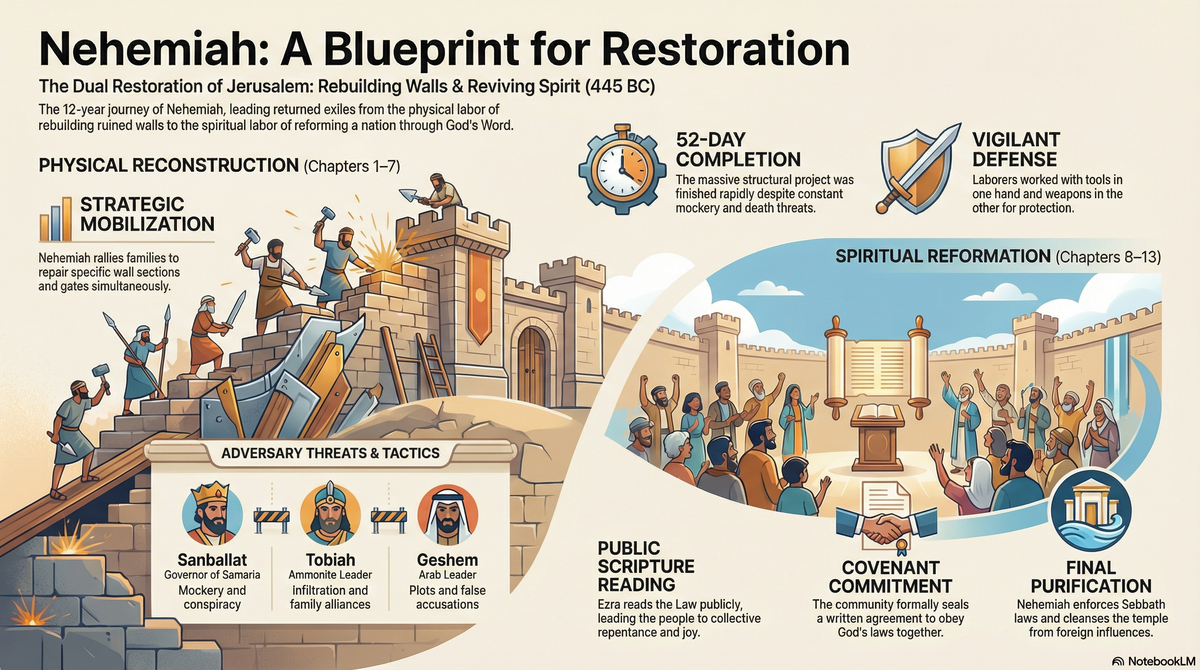
The narrative divides into three main sections: Nehemiah’s call, journey, and wall-building amid opposition (chs. 1–7), the spiritual renewal through Scripture reading and covenant renewal (chs. 8–10), and Nehemiah’s final reforms and dedication of the walls (chs. 11–13). Written to encourage the post-exilic Jewish community, Nehemiah demonstrates God’s faithfulness in restoring His people physically (walls) and spiritually (obedience to the Law), emphasizing prayer, leadership, unity, and perseverance against opposition.
Overall Theme:
The overarching theme of Nehemiah is God’s sovereign restoration of His people through faithful leadership, persistent prayer, and wholehearted commitment to covenant obedience and worship. Nehemiah models a leader who prays fervently, acts decisively, and trusts God’s hand in impossible circumstances.
The rebuilding of Jerusalem’s walls symbolizes physical security and national identity, while the spiritual reforms—public reading of the Law, confession, covenant renewal, and separation from foreign influences—represent the deeper work of heart renewal. The book contrasts the joy of obedience with the danger of compromise, showing that God blesses those who seek Him diligently and work together despite opposition.
Key motifs include prayer (Nehemiah’s constant intercession), opposition overcome by faith, community unity, and the centrality of God’s Word in revival. Nehemiah reassures the returned exiles that God is still at work fulfilling His promises, even under foreign rule, and points forward to the ultimate restoration in Christ, who builds His church and intercedes perfectly for His people.
Location Settings:
Persia (Susa / Shushan) — The Persian royal capital where Nehemiah serves as cupbearer to Artaxerxes; site of his initial prayers and the king’s commission (chs. 1–2).
Jerusalem and Judah — Primary setting for the entire narrative after Nehemiah’s arrival.
- Jerusalem — The focal point: ruined walls and burned gates (1:3), the site of rebuilding (chs. 3–6), dedication (ch. 12), and spiritual gatherings at the Water Gate and square before the Water Gate (ch. 8).
- The walls and gates — Detailed sections repaired by families and groups (ch. 3); opposition targets the work here.
- The temple — Already rebuilt (from Ezra); scene of covenant renewal, confession, and reforms (chs. 8–10, 13).
- Ancestral towns throughout Judah — Where returnees settle (ch. 11); tithes and offerings flow to Jerusalem.
- The surrounding regions — Enemies from Sanballat (Samaria), Tobiah (Ammon), Geshem (Arab), and the Ashdodites threaten from north, east, and west (chs. 4, 6).
The river Ahava — Mentioned briefly in Ezra (cross-referenced); Nehemiah travels from Persia through it. The geography moves from the imperial splendor of Susa to the vulnerable, half-rebuilt city of Jerusalem, symbolizing God’s people reestablished in the land but still needing protection and purification.
People Involved
God (the LORD / Yahweh):
Sovereign over kings and nations; hears prayer, strengthens His people, frustrates enemies, and inspires revival through His Word.
Nehemiah:
Central figure; cupbearer to Artaxerxes, appointed governor of Judah; man of prayer, decisive leader, reformer; rebuilds walls, enforces Sabbath and marriage laws.
Artaxerxes I (king of Persia):
Grants Nehemiah leave, letters, and resources to rebuild Jerusalem.
Ezra (priest and scribe):
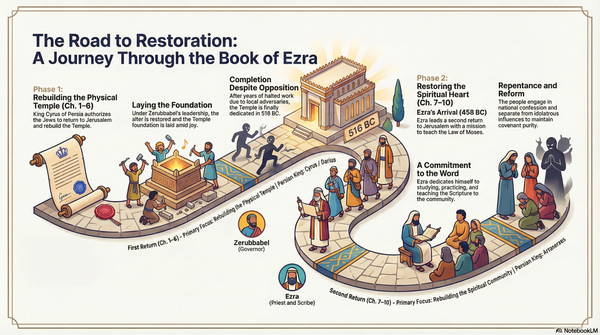
Reads the Law publicly; leads confession and covenant renewal with Nehemiah.
Sanballat the Horonite:
Governor of Samaria; chief adversary; mocks, threatens, and conspires against the work.
Tobiah the Ammonite:
Prominent opponent; allied with Sanballat; infiltrates Jerusalem through family ties.
Geshem the Arab:
Third major enemy; joins in mockery and plots.
The returned exiles / people of Judah:
The builders, families who repair wall sections, hear the Law, confess sins, sign the covenant, and dedicate themselves to God.
Supporting figures / groups:
- Hanani — Nehemiah’s brother; brings report of Jerusalem’s distress.
- The nobles and officials of Judah — Some support, others exploit the poor; later repent.
- The priests, Levites, singers, gatekeepers — Resume temple duties; sign covenant.
- Eliashib the high priest — Allows Tobiah in the temple chamber; later corrected.
- Malachi (implied prophetic influence in reforms); prophets encourage the work (mentioned in Ezra).
Detailed Chapter Summary:
Chapters 1–2 – Nehemiah’s call and commission
Nehemiah hears of Jerusalem’s broken walls; fasts and prays confessionally. Artaxerxes grants leave, letters, and timber. Nehemiah inspects walls secretly at night; rallies people: “Let us rise up and build.”
Chapters 3–4 – Wall building organized and opposed
Detailed account of families repairing sections and gates. Sanballat, Tobiah, Geshem mock and threaten. Nehemiah arms workers; half guard, half build; prays for God’s justice.
Chapters 5–6 – Internal problems and final completion
Nehemiah confronts nobles exploiting poor with usury; restores justice. Conspiracy to lure Nehemiah away; false prophets hired. Walls finished in 52 days despite plots.
Chapter 7 – Census and organization
Nehemiah appoints guards, singers, Levites; registers returnees (parallels Ezra 2); appoints Hanani and Hananiah over Jerusalem.
Chapters 8–10 – Spiritual revival
Ezra reads the Law from a platform; people weep, then rejoice. Feast of Tabernacles kept. Confession prayer recounts God’s history. Leaders seal covenant to obey Law, avoid intermarriage, support temple.
Chapters 11–12 – Repopulation and dedication
Lots cast to repopulate Jerusalem; list of settlers. Priests, Levites, singers listed. Walls dedicated with great procession, music, sacrifices; joy so great it was heard far away.
Chapter 13 – Final reforms
Nehemiah returns after absence; finds Sabbath violations, intermarriages, neglect of temple. Cleanses temple of Tobiah, restores tithes, enforces Sabbath, confronts mixed marriages.
Closing Prayer:
Faithful and mighty God, who hears the cries of Your people and moves the hearts of kings to fulfill Your purposes, we thank You for the book of Nehemiah that displays Your hand in restoration. In Nehemiah’s prayerful leadership, the unity of the builders, and the joy of renewed covenant life, we see Your grace turning ruins into strength and brokenness into worship. Thank You for protecting Your remnant against opposition, reviving them through Your Word, and preserving the hope of David’s line.
Forgive us when we compromise with the world or neglect Your house. Grant us Nehemiah’s burden for Your glory, Ezra’s love for Your Law, and the people’s willingness to work and repent. Above all, we praise You for the greater Builder, Jesus Christ, who has raised up the true temple of His body, gathers His scattered people, and intercedes for us until the day the New Jerusalem descends, its walls of salvation and gates of praise open forever. To You be glory forever. Amen.