The Book of Proverbs: Wisdom for Skillful Living in the Fear of the LORD — Full Book Summary and Key Themes
Comprehensive overview of Proverbs — Solomon’s collection of wise sayings and instructions on the fear of the LORD, the contrast between wisdom and folly, practical guidance for daily life, and the personification of Wisdom foreshadowing Christ.
Summary
The Book of Proverbs is a collection of wise sayings, instructions, and short poems designed to impart practical wisdom for living skillfully in the fear of the LORD.
Traditionally attributed primarily to Solomon (son of David, king of Israel), with contributions from other wise men such as Agur son of Jakeh and King Lemuel (chs. 30–31), the book was compiled during and after Solomon’s reign (c. 970–930 BC), with final editing possibly in the post-exilic period. Proverbs does not follow a single narrative but is organized into several distinct sections: introductory discourses on wisdom (chs. 1–9), Solomon’s proverbs in two large collections (10:1–22:16 and 25:1–29:27), words of the wise (22:17–24:34), and appendices featuring Agur and Lemuel (chs. 30–31).
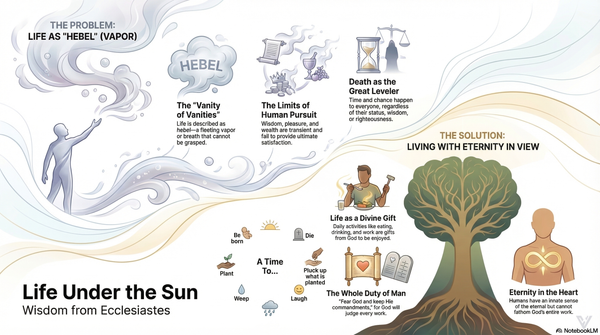
The material spans no continuous historical timeline but draws from observations of life across generations, offering timeless guidance on character, speech, work, relationships, money, discipline, and the contrast between the wise and the foolish. Proverbs emphasizes that true wisdom begins with the fear of the LORD (1:7; 9:10) and leads to a life of blessing, while folly leads to ruin. The book was used for instruction in the home, court, and school, forming the core of Israel’s wisdom literature alongside Job and Ecclesiastes.
Overall Theme:
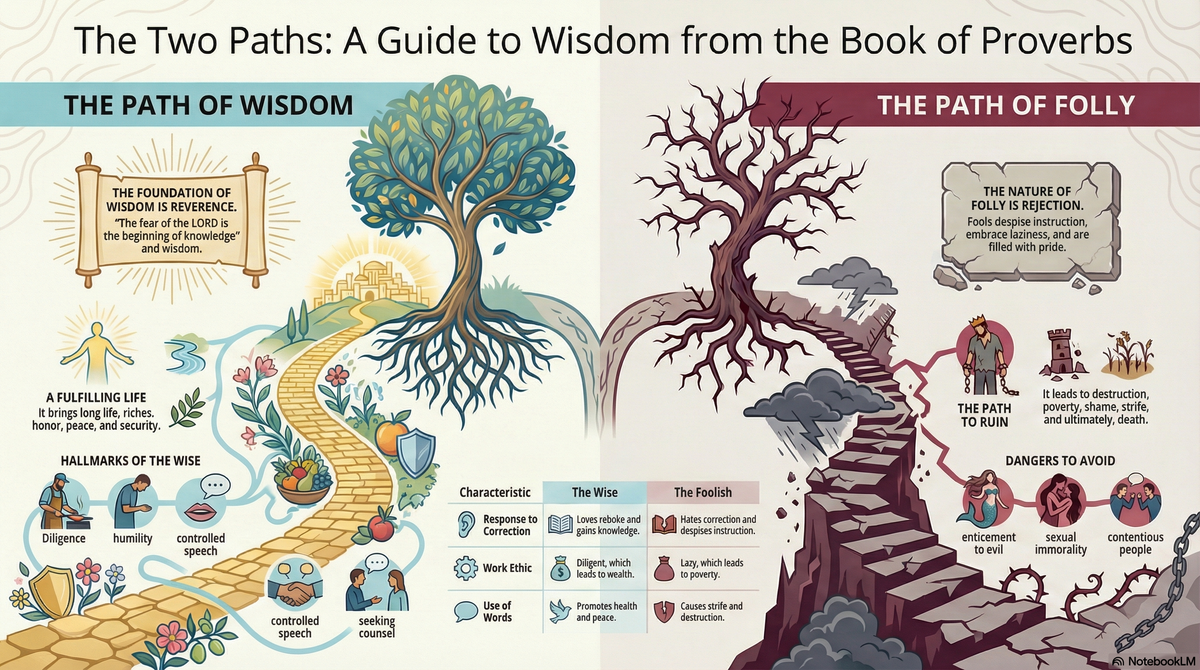
The overarching theme of Proverbs is the pursuit and practice of wisdom as the skillful art of living in the fear of the LORD, leading to life, blessing, and flourishing, in contrast to the destructive path of folly. Wisdom (hokmah) is portrayed as a divine gift, personified as a woman calling aloud in the streets (chs. 1, 8, 9), who was present at creation and offers life to those who embrace her.
The book contrasts two ways: the path of the wise/righteous (marked by righteousness, diligence, humility, honesty, self-control, generosity) versus the path of the fool/wicked (marked by laziness, pride, deceit, violence, immorality). Repeated refrains include “the fear of the LORD is the beginning of wisdom/knowledge” and the promise that the wise inherit blessing while the foolish face consequences.
Proverbs is intensely practical: it addresses everyday issues—speech (taming the tongue), work ethic, family life, money, justice, friendship, and discipline of children—always grounding moral behavior in reverence for God. While not promising trouble-free lives, it teaches that aligning with God’s order brings stability and flourishing. The personification of Wisdom (especially in ch. 8) foreshadows Christ, “the wisdom of God” (1 Corinthians 1:24, 30), who perfectly embodies and imparts divine wisdom.
Location Settings:
Proverbs is not a narrative book with specific geographical progression but a collection of sayings rooted in everyday life in ancient Israel, particularly during the monarchy. Settings are evoked through imagery rather than detailed locations.
Jerusalem / the royal court — Implicit primary setting.
- Solomon’s proverbs reflect the wisdom of the royal court in Jerusalem (1:1; 10:1; 25:1—“proverbs of Solomon copied by the men of Hezekiah”).
- Instruction often assumes a father teaching his son in the home or a king/teacher addressing youth in the city.
The city streets and public places — Wisdom and Folly are personified as women calling out at the busiest corners, city gates, and high places (1:20–21; 8:1–3; 9:3, 14–15).
- The gate was the place of justice, commerce, and community decisions.
The home and family — Frequent setting for instruction: father to son, mother’s teaching, household management (chs. 1–7; 31).
- Domestic scenes include the adulteress at the corner, the sluggard in bed, the virtuous wife overseeing the household.
Fields, vineyards, and workplaces — Agricultural and commercial imagery abounds: the diligent farmer, the lazy sluggard, the ant’s industry (6:6–11; 10:4–5; 24:30–34; 27:23–27).
The path / way / road — Metaphorical “location” central to the book: the path of life vs. the way of death, the way of wisdom vs. the way of evil (2:9–22; 4:10–19; 14:12).
The settings are universal and everyday—city streets, homes, fields, marketplaces—making the proverbs applicable across cultures and eras.
People Involved:
God (the LORD / Yahweh):
Central figure; the source of wisdom, the One to be feared, the righteous Judge who weighs motives and rewards the wise while punishing the wicked.
Solomon:
Dominant voice; son of David, king in Jerusalem; granted unparalleled wisdom by God (1 Kings 3–4); author/compiler of most proverbs (1:1; 10:1; 25:1).
The wise / the righteous:
Ideal figures; those who fear the LORD, listen to instruction, practice self-control, diligence, honesty, and kindness; inherit life and blessing.
The fool / the simple / the wicked / the scoffer:
Contrasted figures; reject wisdom, are lazy, arrogant, deceitful, violent, immoral; face ruin and death.
The father / the mother / the teacher:
Voices of instruction; speak to “my son” (chs. 1–7), urging obedience to wisdom and avoidance of evil.
Lady Wisdom:
Personified as a woman calling aloud, built her house with seven pillars, prepared a feast (1:20–33; 8:1–36; 9:1–6); present at creation; offers life to those who love her.
Dame Folly:
Personified as a loud, seductive, ignorant woman luring the simple to death (9:13–18).
The virtuous wife / woman of noble character:
Ideal portrait in 31:10–31; industrious, wise, kind, feared the LORD; praised by her family and community.
Supporting figures / types:
- The sluggard — Lazy, excuses-filled, poor outcome.
- The adulteress / strange woman — Seduces youth to ruin.
- The king — Ideal ruler who practices justice and wisdom (14:28–35; 16:10–15; 25:2–7).
- Agur son of Jakeh — Humble wise man; confesses limited understanding (ch. 30).
- King Lemuel — Taught by his mother; describes ideal king and virtuous wife (ch. 31).
Detailed Chapter Summary:
Chapters 1–9 – Introduction to wisdom
Purpose: know wisdom and instruction (1:1–7). Father’s exhortations to son: avoid evil companions, pursue wisdom; warnings against adultery, violence; Lady Wisdom calls; her role in creation; invitation to her feast vs. Folly’s deadly invitation.
Chapters 10–22:16 — First collection of Solomon’s proverbs
Short, antithetical sayings contrasting wise/righteous vs. fool/wicked in speech, work, wealth, family, character (e.g., “The fear of the LORD prolongs days, but the years of the wicked will be shortened,” 10:27).
Chapters 22:17–24:34 — Words of the wise
Longer sayings; parallels to Egyptian wisdom (Amenemope); instructions on humility, justice, discipline, avoiding debt, friendship, laziness.
Chapters 25–29 — Second collection of Solomon’s proverbs (copied by Hezekiah’s men)
Focus on kingship, justice, humility, anger, gossip, family, and the poor; vivid imagery (e.g., “A word fitly spoken is like apples of gold in settings of silver,” 25:11).
Chapter 30 — Words of Agur
Humility before God’s wisdom; numeric sayings on creation, human behavior, and the insatiable.
Chapter 31 — Words of King Lemuel
Mother’s teaching on ideal king (justice, strength, sobriety); acrostic poem on the virtuous wife (industrious, wise, kind, fears the LORD).
Closing Prayer:
Gracious and wise God, who grants wisdom generously to those who ask and who sent Your Son as the embodiment of divine wisdom, we thank You for the Book of Proverbs that teaches us the skillful art of living in reverence for You. In the call of Wisdom in the streets, the contrasts between the wise and the fool, and the portrait of the virtuous life, we see Your desire for Your people to walk in righteousness, diligence, humility, and love.
Thank You for Solomon’s inspired words that guide us in speech, work, relationships, and worship. Forgive us when we choose folly, follow our own way, or neglect the fear of the LORD. Grant us grace to listen to Wisdom’s voice, to hide Your words in our hearts, and to live in a way that honors You in every sphere of life.
Above all, we praise You for Jesus Christ, the Wisdom of God, who perfectly feared You, walked in obedience, and now imparts His Spirit to guide us into all truth. May we grow in wisdom and stature until we see You face to face and live fully in the light of Your perfect understanding. To You be glory forever. Amen.