The Second Book of the Chronicles: Solomon's Temple, Judah's Kings, and Exile — Full Book Summary and Key Themes
Comprehensive overview of 2 Chronicles — Solomon's temple dedication, the divided kingdom's history through Judah's kings, major reforms under Hezekiah and Josiah, and the fall to Babylon with Cyrus's decree of restoration, emphasizing worship and covenant faithfulness.
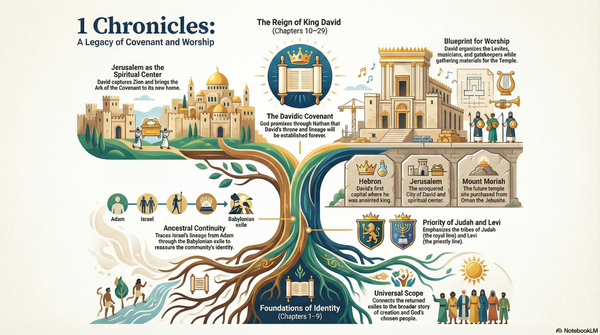
The Second Book of the Chronicles (commonly called 2 Chronicles) continues directly from 1 Chronicles, focusing on the history of the southern kingdom of Judah from the reign of Solomon through the Babylonian exile and the decree of Cyrus allowing return.
Written from a post-exilic priestly perspective (likely the same chronicler as 1 Chronicles, possibly Ezra or a contemporary), the book emphasizes the temple, proper worship, the Davidic dynasty, and God's faithfulness to His covenant despite Israel's failures. Unlike Kings, which stresses the causes of judgment and includes northern Israel extensively, Chronicles concentrates almost exclusively on Judah, portraying kings positively when they seek the LORD and reform worship, while condemning idolatry and neglect of the temple. he book covers roughly 400 years (c. 971–538 BC), from Solomon's accession to the edict of Cyrus. It divides into three main sections: Solomon's reign and temple dedication (chs. 1–9), the divided kingdom and Judah's kings (chs. 10–36:21), and the brief hopeful note of Cyrus's decree (36:22–23).
Overall Theme:
The overarching theme of 2 Chronicles is God's covenant faithfulness to the house of David and the centrality of the Jerusalem temple as the place of true worship and national blessing. The book repeatedly shows that when kings and people humble themselves, seek the LORD, and maintain proper worship, God responds with blessing, deliverance, and prosperity.
Conversely, idolatry, neglect of the temple, and pride lead to judgment—yet even in judgment, God remains merciful, sending prophets and preserving a remnant. Key refrains include calls to "seek the LORD" (e.g., 7:14; 15:2), the importance of revival and reform (Asa, Jehoshaphat, Hezekiah, Josiah), and the promise that God's eyes and heart are on the temple (7:16).
Solomon's temple dedication prayer and God's response (ch. 7) set the theological framework: if My people humble themselves, pray, seek My face, and turn from sin, I will hear, forgive, and heal. Chronicles encourages the post-exilic community to rebuild worship and trust God's promises to David, pointing ultimately to the greater Son of David and the eternal temple in Christ.
Location Settings:
Jerusalem — The dominant and unifying setting throughout the book.
- The temple (built by Solomon on Mount Moriah) is the spiritual and narrative center: construction, dedication, repeated reforms, desecrations, and final destruction by Babylon (chs. 3–7, 29–31, 34–36).
- The palace and city walls feature in Solomon's and later kings' reigns.
- Jerusalem is the place where God's name dwells, where true sacrifices are offered, and where revival occurs under godly kings.
Gibeon — Solomon's early sacrifice and dream of wisdom at the high place (ch. 1).
Various battlefields and border regions — Geba, Ramah (Asa vs. Baasha), Zephathah valley (Asa vs. Ethiopians), Tekoa (Jehoshaphat), Lachish (Sennacherib's siege), Megiddo (Josiah's death).
Northern kingdom sites (mentioned sparingly) — Bethel, Dan (Jeroboam's calves), Samaria (Ahab, Jehu).
Babylon — Final destination of exile; Cyrus's decree issued there (36:22–23).The focus remains Judah-centric, with Jerusalem as the theological heart of the nation and the place where God's presence is manifest.
People Involved
God (the LORD / Yahweh):
Sovereign over kings and nations; faithful to His covenant with David; responds to prayer, humility, and proper worship; judges idolatry but offers restoration.
Solomon:
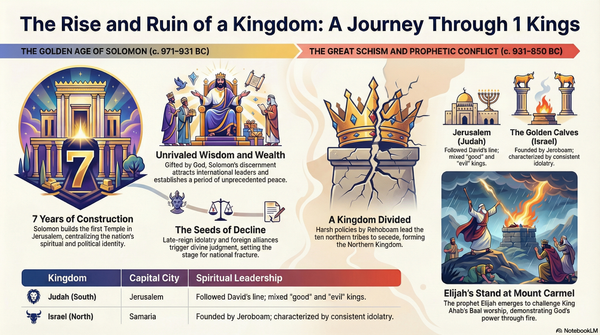
David's son; wise king who builds and dedicates the temple; prays for God's presence; prospers but later turns to idolatry (mentioned briefly).
Rehoboam:
Solomon's son; foolish policies lead to kingdom division; later humbles himself and strengthens Judah.
Abijah (Abijam):
Rehoboam's son; defeats Jeroboam by relying on the LORD.
Asa:
Godly king; removes idols, seeks God in battle against Ethiopians; later relies on Syria instead of God.
Jehoshaphat:
Asa's son; faithful reformer; sends teachers of the law; trusts God against Moab/Ammon; his prayer and victory song highlight seeking the LORD.
Joash (Jehoash):
Hidden as child; crowned after Athaliah's death; repairs temple under Jehoiada but turns to idolatry after Jehoiada's death.
Amaziah, Uzziah (Azariah), Jotham:
Mixed reigns; Uzziah prospers until pride leads to leprosy for usurping priestly role.
Ahaz:
Wicked; promotes idolatry, closes temple doors, seeks Assyrian help.
Hezekiah:
One of the greatest reforming kings; reopens temple, purifies worship, celebrates Passover, trusts God against Sennacherib; prays for healing; sun dial miracle.
Manasseh:
Most wicked; idolatry, child sacrifice; repents in Babylonian captivity; reforms upon return (unique to Chronicles).
Amon:
Manasseh's son; evil; assassinated.
Josiah:
Most faithful king since David; finds law book, leads massive reforms, restores Passover; dies at Megiddo.
Jehoahaz, Jehoiakim, Jehoiachin, Zedekiah:
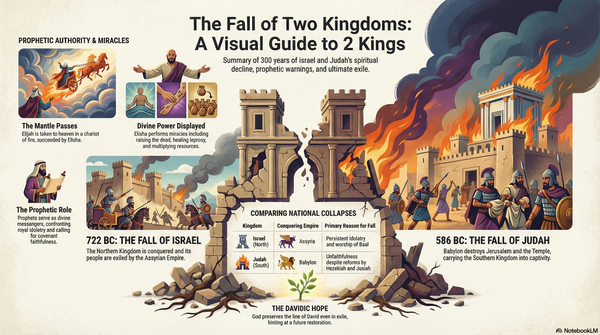
Final kings; rebellion and idolatry lead to Babylonian conquest and exile.
Supporting figures:
- Hiram of Tyre — Supplies temple materials.
- Jehoiada — High priest who protects Joash.
- Isaiah — Prophet during Hezekiah's reign.
- Huldah — Prophetess during Josiah's reforms.
- Nebuchadnezzar — Babylonian king who destroys temple.
- Cyrus — Persian king who decrees return.
Detailed Chapter Summary:
Chapters 1–9 – Solomon's reign
Solomon asks for wisdom at Gibeon; builds temple (detailed preparations, construction, furnishings). Ark brought in; God's glory fills house. Solomon's prayer of dedication; fire from heaven, sacrifices, festival. God appears: if people humble themselves, He will heal (7:14). Solomon's wealth, wisdom, Queen of Sheba visit; chariot cities, trade.
Chapters 10–12 – Rehoboam and division
Rehoboam rejects advice; kingdom splits. Jeroboam king of Israel. Rehoboam fortifies Judah; Shishak invades; Rehoboam humbles himself, judgment lightened.
Chapters 13–16 – Abijah, Asa
Abijah defeats Jeroboam by trusting God. Asa removes idols, defeats massive Ethiopian army through prayer; later relies on Syria, diseased feet.
Chapters 17–20 – Jehoshaphat
Teaches law throughout Judah; fortified cities. Allied with Ahab unwisely. Trusts God against Moab/Ammon; singers lead army; victory without fighting.
Chapters 21–24 – Jehoram to Joash
Jehoram kills brothers; killed by disease. Ahaziah killed by Jehu. Athaliah usurps; Joash crowned, temple repaired under Jehoiada; later turns, kills Zechariah (Jehoiada's son).
Chapters 25–28 – Amaziah to Ahaz
Amaziah defeats Edom but adopts their gods. Uzziah prospers, struck with leprosy for burning incense. Jotham faithful. Ahaz wicked; closes temple, Assyrian alliance.
Chapters 29–32 – Hezekiah's reforms
Reopens temple, purifies it; great Passover. Sennacherib besieges; Hezekiah prays with Isaiah; angel destroys Assyrian army. Hezekiah's illness, healing, pride with Babylonian envoys.
Chapters 33–36 – Manasseh to exile
Manasseh's idolatry; repents in captivity, reforms. Amon evil. Josiah's reforms: law book found, idols purged, Passover kept. Jehoahaz, Jehoiakim, Jehoiachin, Zedekiah rebel; temple destroyed, exile. Cyrus decrees return.
Closing Prayer:
Faithful and merciful God, who kept Your promise to David even through centuries of rebellion and exile, we thank You for the book of 2 Chronicles that exalts the temple as the place of Your name and shows how You respond to those who seek You with humble hearts. In Solomon's dedication, Hezekiah's trust, Josiah's reforms, and even Manasseh's late repentance, we see Your grace triumphing over sin.
Thank You for preserving the Davidic line through judgment and pointing to the greater Temple—Jesus Christ—who offered Himself as the perfect sacrifice and now intercedes for us. Teach us to humble ourselves, pray, seek Your face, and turn from sin, that You may hear from heaven, forgive, and heal our land and lives until we worship in the New Jerusalem forever. To You be glory forever. Amen.
Try Pastor Mugs App
Your KJV Pocket Companion. Faithful insights, verse clarity, guided prayers—ready whenever you open the Word.
Start Free, no strings ->