The Third Book of Moses: Called Leviticus
Detailed overview of the book of holiness and atonement — God’s instructions for Israel’s worship, priesthood, sacrifices, purity laws, moral conduct, and the Day of Atonement, establishing how a holy God dwells among a sinful people through blood sacrifice and obedient living.
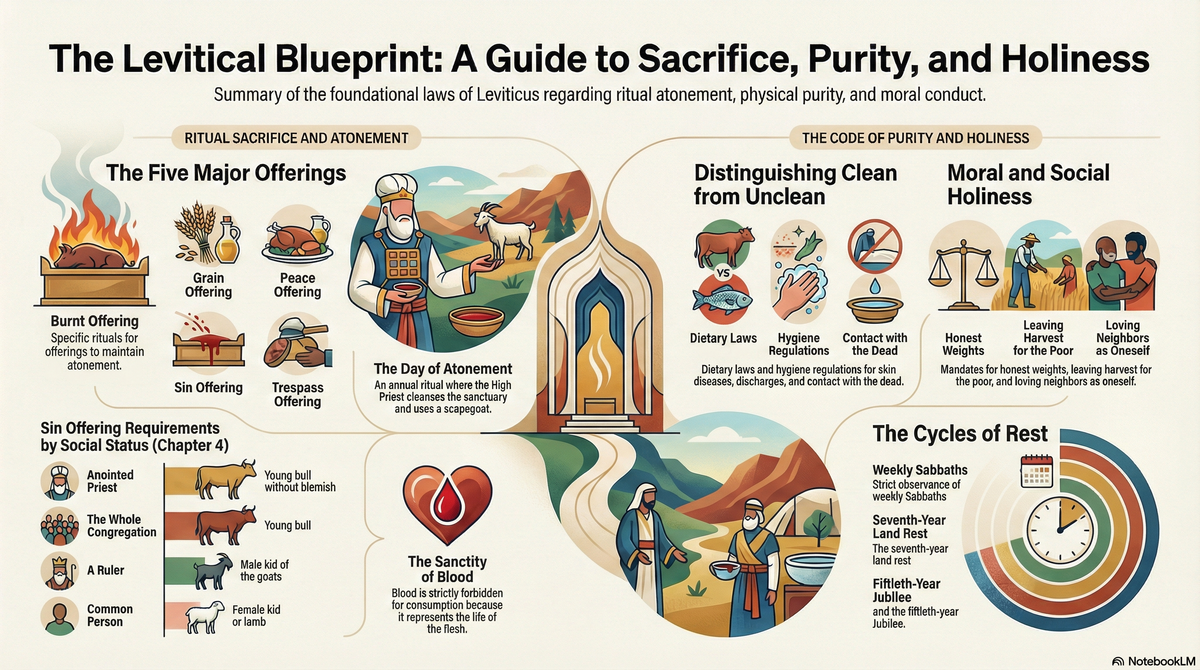
Summary
Leviticus, the third book of the Pentateuch, is primarily a manual of priestly instruction given by God through Moses at Mount Sinai, following the completion of the Tabernacle in Exodus. While Exodus ends with God’s glory filling the Tabernacle, Leviticus explains how sinful Israel can approach and worship a holy God who now dwells among them.
The book details the sacrificial system, priestly ordination, laws of purity and impurity, the annual Day of Atonement, ethical commands, and regulations for holy living. Traditionally attributed to Moses, Leviticus contains little narrative and focuses almost entirely on divine speech (“The LORD spoke to Moses, saying…”), with the setting confined to the camp at Sinai shortly after the covenant was ratified.
Establishing the means of atonement, the standards of holiness, and the consequences of disobedience, preparing Israel to be a holy nation set apart for God.
Overall Theme:
The overarching theme of Leviticus is holiness: God is holy, and He calls His redeemed people to reflect His holiness in every area of life. The repeated refrain “You shall be holy, for I the LORD your God am holy” (11:44–45; 19:2; 20:26) captures the book’s heart. Because God’s glory now resides in the Tabernacle in the midst of the camp, sin cannot be tolerated. Leviticus reveals how atonement is made through blood sacrifice (pointing forward to Christ’s ultimate sacrifice), how priests mediate between God and people, and how Israel must maintain ritual and moral purity to enjoy fellowship with a holy God.
The book contrasts defilement with consecration, uncleanness with cleanness, and rebellion with obedience, showing that true worship involves both costly atonement and transformed daily living. Leviticus underscores God’s grace in providing a way for sinners to draw near while demanding separation from sin.
Location Settings:
Mount Sinai (Horeb) / the camp of Israel: The entire book takes place at the foot of Mount Sinai in the wilderness of Sinai, in the newly erected Tabernacle and the surrounding Israelite camp. No journeys or travel occur; the focus is stationary and liturgical.
- The Tabernacle — Central sanctuary with the altar of burnt offering in the courtyard, the bronze laver, the holy place, and the Most Holy Place containing the ark of the covenant.
- The camp — Organized by tribes around the Tabernacle; priests and Levites closer in; the people farther out.All instructions are given while Israel remains encamped at Sinai, between the covenant ratification (Exodus 24) and their departure toward Canaan (Numbers 10).
People Involved:
God (the LORD / Yahweh):
The holy, speaking God who gives all the laws; He demands worship on His terms and promises blessing for obedience and judgment for disobedience.
Moses:
The mediator who receives and relays every instruction from God to Aaron, the priests, and the people.
Aaron:
Moses’ brother; consecrated as high priest; central figure in sacrifices, ordination, and the Day of Atonement.
Aaron’s sons:
- Nadab and Abihu — Eldest sons; die for offering unauthorized fire before the LORD (ch. 10).
- Eleazar and Ithamar — Surviving sons who continue the priesthood.
The priests (Aaron’s descendants):
Responsible for offering sacrifices, maintaining the Tabernacle, distinguishing holy from common, clean from unclean.
The Levites:
Mentioned briefly; their broader service is developed in Numbers.
The Israelites (children of Israel):
The covenant people who must offer sacrifices, observe purity laws, keep festivals, and live holy lives.
Supporting figures:
The congregation as a whole; occasional references to individual offerers (e.g., the person with skin disease, the poor who bring lesser offerings).
Detailed Chapter Summary:
Chapters 1–7 – The sacrificial system
Detailed laws for five main offerings:
- Burnt offering (voluntary, complete surrender)
- Grain offering (thanksgiving, dedication)
- Peace offering (fellowship, thanksgiving, vow)
- Sin offering (for unintentional sins)
- Guilt (trespass) offering (for specific wrongs, with restitution) Instructions cover the offerer’s actions, the priests’ portions, and proper handling of blood and fat.
Chapters 8–10 – Consecration of the priests and tragic incident
Aaron and his sons are ordained with anointing oil, sacrifices, and seven days of consecration. On the eighth day, fire from the LORD consumes the offerings. Nadab and Abihu offer “strange fire” and are consumed by fire from the LORD. Aaron remains silent; further rules given about priests’ conduct.
Chapters 11–15 – Laws of clean and unclean
Dietary laws (clean/unclean animals); purification after childbirth; laws concerning skin diseases (leprosy), mildew, bodily discharges. Emphasis on ritual purity to approach God.
Chapter 16 – The Day of Atonement (Yom Kippur)Annual ritual for national atonement:
high priest enters Most Holy Place once a year with blood of sin offering; scapegoat bears sins into wilderness; atonement for sanctuary, priests, and people.
Chapters 17–26 – The Holiness CodeCentral section stressing holy living:
- Proper handling of blood (17)
- Sexual purity laws (18)
- Various moral commands (19)
- Penalties for sins (20)
- Priestly holiness (21–22)
- Appointed feasts (23): Sabbath, Passover, Unleavened Bread, Firstfruits, Pentecost, Trumpets, Day of Atonement, Tabernacles
- Instructions for oil, bread, blasphemy (24)
- Sabbatical year and Jubilee (25)
- Blessings for obedience, curses for disobedience (26)
Chapter 27 – Vows and dedications
Rules for redeeming vows, tithes, and devoted things; closing section on valuation and redemption.
Closing Prayer:
Holy God, whose name is exalted above every name and whose presence cannot abide with sin, we thank You for the book of Leviticus that reveals the depth of Your holiness and the costly provision You made for sinners to draw near.
Through the blood of bulls and goats, the sprinkled mercy seat, and the scapegoat bearing iniquity, we see shadows of the perfect sacrifice of Your Son, Jesus Christ, who entered the true sanctuary once for all.
Teach us to pursue holiness without which no one will see You, to offer ourselves as living sacrifices, and to walk in grateful obedience to Your commands. May Your Spirit sanctify us wholly until we stand before You in perfect purity, giving You glory forever. Amen.